Zoning Outside City Limits: What Texas Landowners Face
Texas counties cannot zone. That single fact answers most questions about zoning outside city limits, and it leaves buyers exposed anyway. Municipal zoning authority comes from Chapter 211 of the Local Government Code, and it stops at the city line. What changed is everything that happens when that line moves toward a tract, and it changed twice in the past 18 months. Once in the Legislature. Once in federal court.
The Texas Real Estate Research Center published a clean primer on Chapter 211 in July, written by research attorney Rusty Adams. It walks through the statutory skeleton: notice periods, hearings, the board of adjustment. It is a primer on the statute rather than on the 2025 amendments, and the amendments are where the leverage moved.
Why Zoning Outside City Limits Does Not Exist in Texas
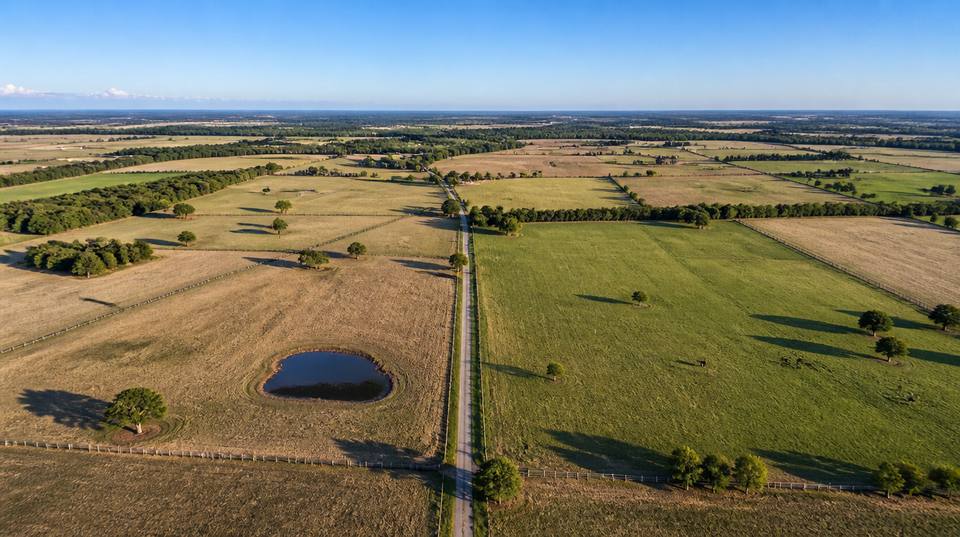
Chapter 211 grants zoning power to municipalities only. There is no county equivalent. A landowner in unincorporated Cooke, Fannin, or Wise County holds a tract with no use district, no setback schedule, and no permitted-use table. Zoning outside city limits is not a power the Legislature ever granted.
That is not the same as unregulated. Counties retain platting and subdivision authority under Chapter 232, plus on-site sewage facility permitting, floodplain administration, and road standards. Those powers shape density and layout even though they never assign a use. Zoning outside city limits stays absent. Regulation does not.
The extraterritorial jurisdiction sits between the two. Section 212.003 lets a city extend plat and subdivision rules into its ETJ, but bars it from regulating the use of buildings and property, building height, bulk, and density. So zoning outside city limits remains unavailable to cities even in the ring they otherwise control. The practical result is a tract that can be platted to a city's standard while remaining outside any use district.
For a land investor, that gap is the whole game. The question is never whether zoning outside city limits applies today. It is what the tract becomes when a city annexes it, and what the neighbors can do about it.
What the 2025 Session Changed Inside the City Line
House Bill 24 does not touch zoning outside city limits, because there is nothing there to touch. It took effect September 1, 2025, and rewrote the protest math under Section 211.006 for everything inside the line. Before that date, owners of 20 percent of the land within 200 feet of a proposed change could force a three-fourths council vote.
The enrolled text is more specific than most coverage suggests. New Section 211.0061(b) sets three tiers. Owners of at least 20 percent of the area covered by the change may protest. So may owners of at least 20 percent of the adjoining area extending 200 feet. But that second tier carries an express exception: when the proposed change increases residential development and adds no commercial or industrial use beyond a first floor capped at 35 percent of the development, the adjoining threshold climbs to 60 percent and the 20 percent route closes. The tiers are not a menu.
The vote requirement splits along the same line. The first two scenarios still trigger a three-fourths vote. The third requires only a simple majority.
Section 211.0065 adds a presumption of validity. A zoning change that allows more residential development than the previous regulation is conclusively presumed valid if no action to annul it is filed before the 60th day after the effective date.
The arithmetic changed too. Street and alley area has always counted toward the percentage, but Section 211.0061(c)(2) now requires land area to be calculated in the aggregate across all tracts subject to a change rather than individually for each tract. Spreading a rezoning across several parcels dilutes any single owner's share of the protest area.
The provision with the longest reach is the one that removes protest rights altogether. Section 211.0011 defines a "proposed comprehensive zoning change" to include a new citywide zoning code or map, a uniform district-wide change that allows more residential development, and an overlay district that allows more residential development along a major roadway, highway, or transit corridor. Section 211.0061(a) exempts every one of those from the protest process. Corridor overlays cannot be protested.
HB 24 also repealed Section 211.006(f), which had let a city require a three-fourths council vote to overrule a zoning commission recommendation of denial. And the new Section 211.0073 sign requirement carries a stated size, 24 inches by 48 inches, posted by the 10th day before the commission hearing and maintained until final determination.
Read together, those provisions make residential upzoning materially easier to approve and harder to unwind. That is the stated intent of the bill, which its author framed as returning decision authority to landowners and elected councils rather than adjacent owners. One limit is worth noting: the changes apply only to proposals made on or after September 1, 2025.
Why Adjacency Risk Rose for Land Outside City Limits
Here is the part that matters for anyone holding acreage in a growth corridor. Land bought where zoning outside city limits does not apply still absorbs whatever the neighboring city decides. Buyers routinely pay a premium for a quiet edge, meaning a tract whose neighbors look unlikely to change. That premium rested on an assumption that the neighbors could block a bad rezoning if one came.
That assumption is weaker now. A residential rezoning next door faces a 60 percent adjoining-owner threshold and, even if the protest clears, only a simple majority vote. In a five-member council, the difference between four votes and three is often the entire outcome.
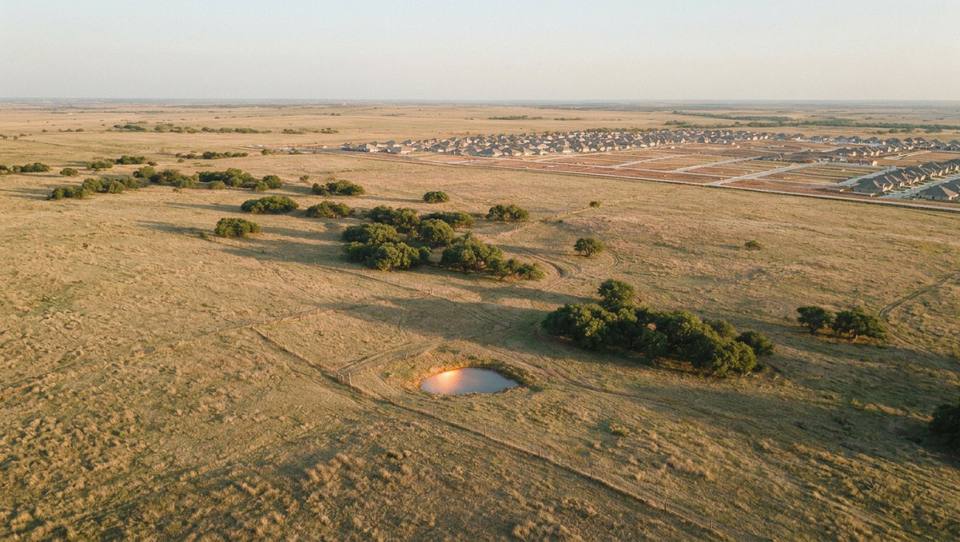
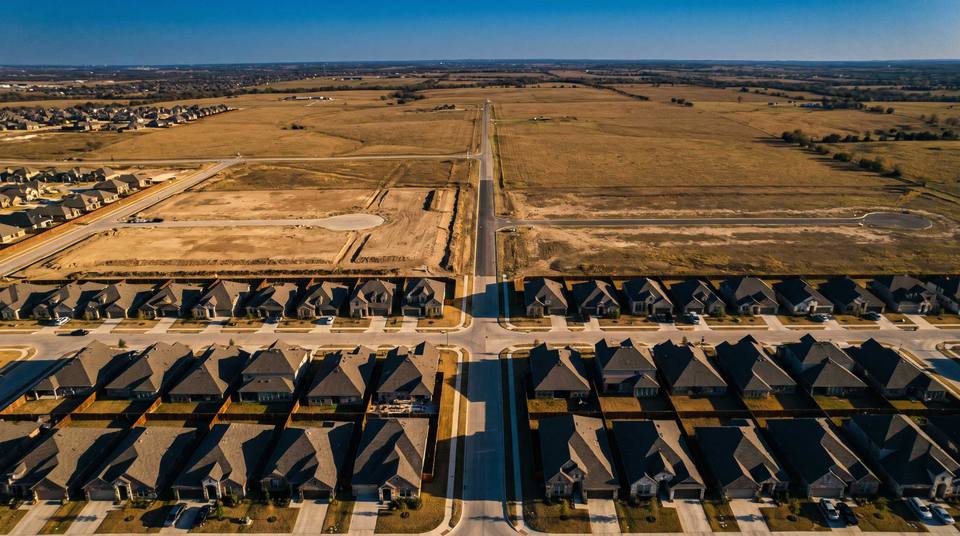
Land held outside city limits does not escape this. It inherits it. When annexation or a boundary adjustment brings a tract into the city, the surrounding parcels come under the same revised rules, and the buffer a buyer thought he purchased becomes a matter of council math.
The inverse also holds. An investor acquiring a tract to entitle, whether inside the city or on ground where zoning outside city limits does not yet reach, has a cleaner path than in 2024. Whether that is opportunity or exposure depends entirely on which side of the transaction a person sits.
The ETJ Exit Is Real and Still Contested
One statutory path does move ground away from municipal reach, though it does not deliver zoning outside city limits either. Senate Bill 2038, passed in 2023, lets a landowner petition for release from a city's ETJ, with release occurring by operation of law if the city fails to act. Exceptions apply, including property within five miles of a military base with an active training program.
Cities fought it. In Elliott v. City of College Station, decided May 9, 2025, the Texas Supreme Court declined to reach the constitutional question and instead directed the plaintiffs to the statutory remedy, signaling that cities cannot simply refuse valid petitions while the challenge proceeds.
The dispute is still live. On August 4, 2026, U.S. District Judge Robert Pitman granted a preliminary injunction in POWER v. City of Austin, blocking the city from enforcing its March 2026 decision to void roughly 170 prior ETJ releases near the Bee Caves Armory. That is a preliminary ruling, not a final answer.
For North Texas owners, the takeaway is narrower than the headlines. An ETJ release removes plat and subdivision oversight. It does not create zoning outside city limits, because no such authority exists, and it does not immunize a tract from future annexation.
What to Verify Before You Close
Diligence on zoning outside city limits is diligence on the city's intentions, not on the county's rulebook. The county file will not tell a buyer what zoning outside city limits becomes once the boundary moves.
- ETJ status and depth. Confirm which city claims the tract and how far its ETJ reaches, since depth scales with municipal population.
- Comprehensive plan designation. Chapter 211 requires zoning to follow a comprehensive plan. The plan's future land use map is the best available signal of what the tract becomes post-annexation.
- Utility and CCN service area. Water and wastewater providers determine annexation leverage more reliably than any map.
- Adjoining ownership concentration. Under the revised thresholds, a few large adjacent owners matter more than many small ones.
- Recent rezoning history. Pull the last 24 months of council approvals in that jurisdiction. Approval rates tell more than the ordinance text.
- Pending release petitions. An adjacent owner's ETJ exit changes the regulatory picture on both sides of the property line.
Where This Leaves Land Buyers
Zoning outside city limits is a question with a short legal answer and a long practical one. The statute has not changed since 1927 in its essentials, and Adams is right that Chapter 211 balances municipal control against private property rights.
What shifted in 2025 is the weight on each side of that balance. Protest leverage narrowed for adjoining owners. Approval paths widened for applicants. ETJ exits became enforceable while remaining contested. None of that appears in a county plat file, and none of it will show on a survey.
Underwrite the city's trajectory, not the tract's current status. Treat zoning outside city limits as a timing question rather than a legal one. Request a Growth Corridor Land Brief for a parcel-level read on ETJ position, comprehensive plan designation, and annexation exposure across the eight-county North Texas footprint.
References
- Drawing the Line: Texas Zoning Law Explained, Texas Real Estate Research Center Cited for: Chapter 211 structure, statutory purposes, notice and hearing requirements, board of adjustment procedures, and the 1927 Texas adoption of the Standard State Zoning Enabling Act.
- Texas Local Government Code Section 211.006 Cited for: the pre-2025 protest threshold and the three-fourths vote requirement.
- Texas Municipal League Legislative Update, September 5, 2025 Cited for: HB 24 protest thresholds, vote requirements, presumption of validity, and land area calculation changes.
- House Bill 24, Enrolled Version, 89th Texas Legislature Cited for: Sections 211.0011, 211.0061, 211.0065, and 211.0073 as enacted, the repeal of Sections 211.006(d) and (f), the prospective application clause, and the September 1, 2025 effective date.
- House Bill 24 Bill Analysis, 89th Texas Legislature Cited for: stated legislative intent regarding landowner and council decision authority.
- Commentary on Elliott v. City of College Station, No. 23-0767 Cited for: the May 9, 2025 Texas Supreme Court disposition and the SB 2038 statutory remedy.
- Federal Judge Blocks City of Austin's Attempt to Reassert Extraterritorial Jurisdiction Cited for: the August 4, 2026 preliminary injunction, the roughly 170 affected properties, and the SB 2038 military base exception.
Related: Willow Park Annexation Lawsuit Threatens $500M Texas Development