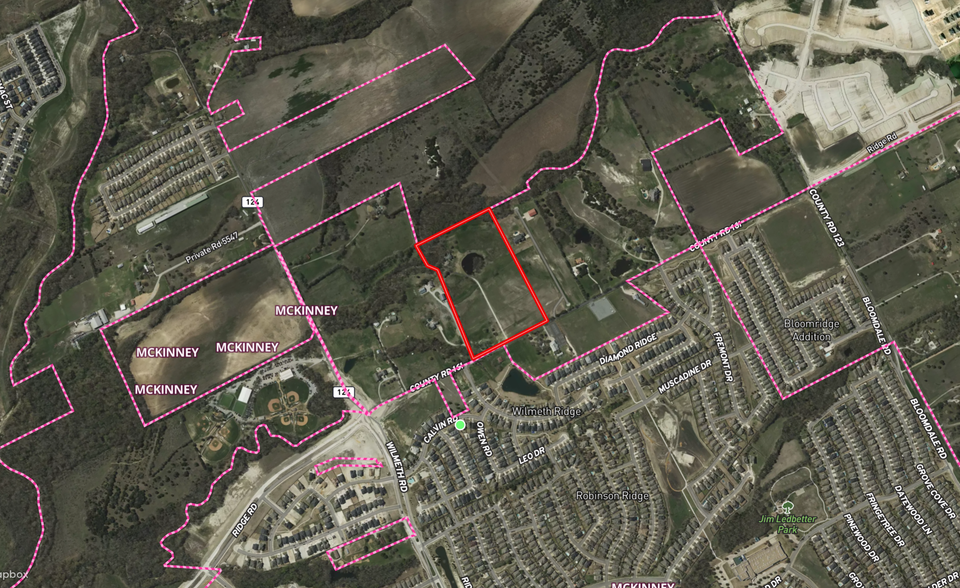
Bonham has greenlit Powder Creek Ranch Bonham Texas, its first master-planned community bringing 3,000 residential units to 400 acres near State Highways 121 and 56. The Fannin County development marks a watershed moment for the town of approximately 10,700 residents, signaling North Texas sprawl has reached markets 70 miles northeast of Dallas.
Dallas-based Sanchez & Associates will develop Powder Creek Ranch Bonham through seven phases concluding in 2035. The residential mix spans single-family homes, townhomes, build-to-rent units, and multifamily properties priced between $250,000 and $450,000. Phase One covers 73 acres with 205 multifamily units plus single-family and BTR homes, with groundbreaking slated for late 2026.
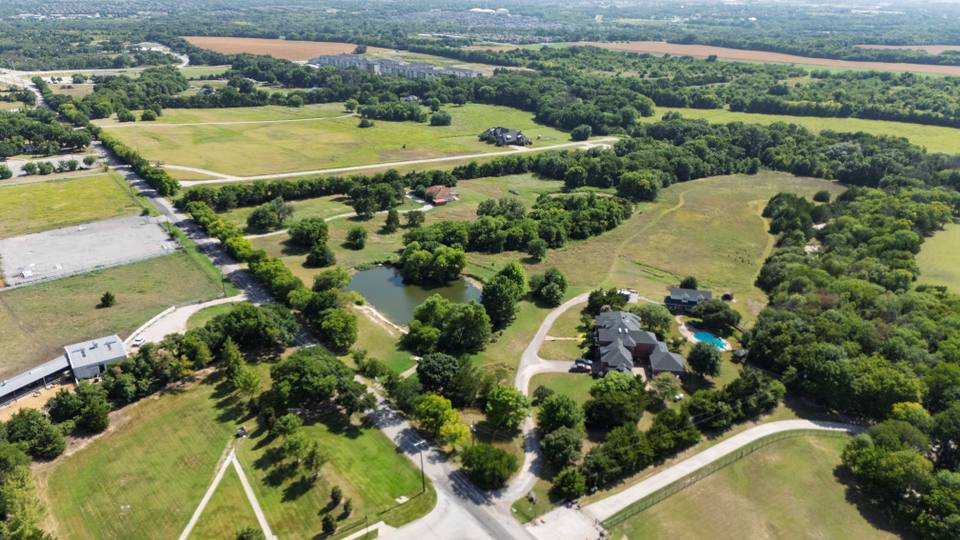
The Bonham City Council approved the city’s first Public Improvement District in November 2024 to finance infrastructure supporting the decade-long buildout. The Powder Creek Ranch Bonham site previously operated as a 1960s ranch owned by Joe Kirkpatrick, a World War II veteran who founded Cisco Boots.
Why Powder Creek Ranch Bonham Signals Critical Market Shift
Powder Creek Ranch Bonham sits 71 miles northeast of downtown Dallas, 39 miles from McKinney, and approximately 25 miles from Sherman. This positioning places the development within commuting range of northern Collin County and Grayson County employment centers while delivering housing costs substantially below Dallas metro averages.
The market fundamentals driving Powder Creek Ranch Bonham reflect specific economic pressure. Sherman’s industrial expansion and technology sector growth, combined with northern Collin County’s continued buildout, created demand for workforce housing beyond premium-priced inner ring suburbs. Bonham provides accessible developable land and lower construction costs while maintaining highway connectivity via State Highway 121.
Traffic data validates the growth thesis. State Highway 121 carries 16,000 vehicles daily through Bonham, while State Highway 56 handles 13,000 vehicles per day. These volumes indicate steady traffic flow without the congestion that extends commute times along major Dallas corridors like US 75 or the Dallas North Tollway.
William Myers, executive director of the Bonham Economic Development Corporation, confirmed accelerating developer interest. “With the tech boom happening in nearby Grayson County and continued growth into northern Collin County, Bonham continues to see increased attention from developers and employers,” Myers told the Dallas Business Journal.
Powder Creek Ranch Bonham Development Timeline and Phasing
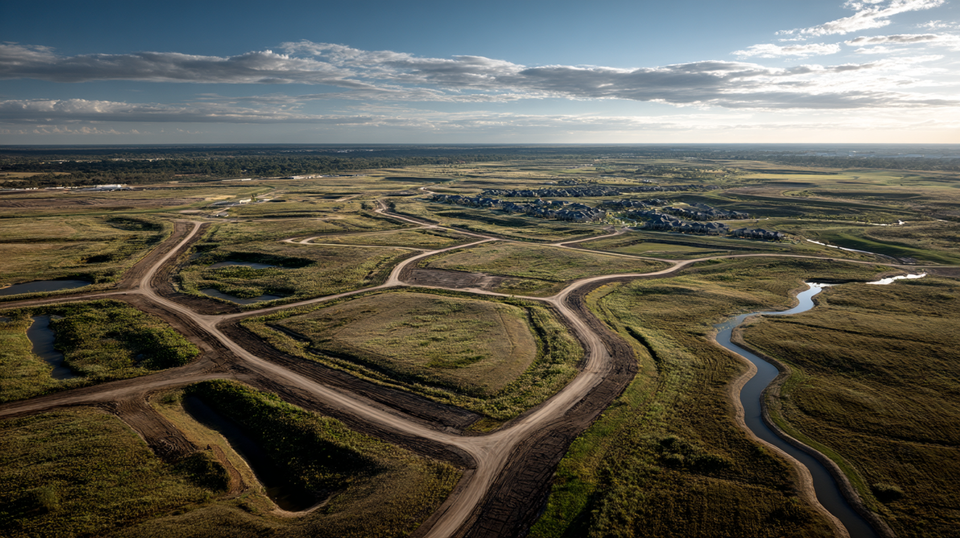
Phase One of Powder Creek Ranch Bonham encompasses 73 acres currently in civil design. Construction launches late 2026, beginning with multifamily units alongside single-family and build-to-rent homes. The Real Deal reported Phase One includes 205 single-family homes and 350 BTR units with rents projected between $1,200 and $2,200 monthly.
Future phases will layer retail, restaurant, and office space into the residential framework. The Powder Creek Ranch Bonham master plan incorporates public parks, trail systems, and open green spaces designed to boost walkability and sustain property values through full buildout.
The seven-phase structure extending through 2035 allows Sanchez & Associates to calibrate construction pace to absorption rates and market conditions rather than committing to an inflexible schedule that risks oversupplying the local market.
Homes at Powder Creek Ranch Bonham will range from $250,000 to $450,000. This pricing establishes a clear value proposition against comparable new construction in McKinney (median home value approximately $450,000) or Frisco (median exceeding $500,000). Zillow data shows Bonham’s current median home value at approximately $227,300, roughly $30,000 below Sherman and less than half of McKinney and Frisco averages.
Market Implications for Texas Land Professionals
Powder Creek Ranch Bonham represents the leapfrog development pattern that emerges when metropolitan growth exhausts established suburban rings. Bonham’s approval of its first PID and first master-planned community indicates city leadership positioning for sustained growth rather than treating Powder Creek Ranch Bonham as an isolated project.
For land investors and developers, the market ramifications extend beyond the immediate 400-acre site. Infrastructure investments required to support 3,000 new residential units will upgrade access and utilities across surrounding areas, potentially activating adjacent land for future phases or competing developments.
The $250,000 to $450,000 pricing band at Powder Creek Ranch Bonham establishes what attainable housing means in this market. Build-to-rent components signal institutional capital evaluating Bonham as a legitimate expansion market, which typically precedes broader development activity.
Critical monitoring points for Powder Creek Ranch Bonham include:
Absorption metrics: Phase One multifamily and BTR unit lease-up rates will demonstrate whether demand matches projections or if pricing requires adjustment.
Infrastructure capacity: Water and wastewater systems must accommodate 3,000 units. Any capacity constraints will delay later phases and increase per-unit infrastructure costs.
Commercial activation: Retail and office leasing activity in subsequent phases validates whether rooftop density supports commercial development or if this remains primarily a bedroom community.
Land transaction velocity: Adjacent property sales will reveal whether competing developers or land bankers view Powder Creek Ranch Bonham as a market catalyst or an anomaly.
How Powder Creek Ranch Bonham Fits the North Texas Growth Corridor
Powder Creek Ranch Bonham follows a recognizable North Texas master-planned community pattern where large-scale residential developments anchor growth in previously agricultural markets. Similar dynamics unfolded in Celina, Prosper, and Anna as Dallas expansion pushed north into Collin County throughout the 2010s.
The critical difference is distance and timing. Powder Creek Ranch Bonham sits further from core Dallas employment centers than Collin County communities were when they received their first major residential developments. This raises fundamental questions about long-term absorption capacity and whether remote work trends have permanently expanded commute tolerance beyond traditional 30-45 minute thresholds.
Sanchez & Associates CEO J. Martin Sanchez emphasized Powder Creek Ranch Bonham’s natural features influenced design decisions, suggesting the development will work with existing topography and creek systems rather than imposing generic suburban templates. This approach typically produces higher-quality neighborhoods that maintain value better through market cycles.
The decision to preserve elements of the site’s ranching history while delivering modern amenities reflects understanding that buyers at this price point choose between new construction in distant suburbs versus older homes closer to Dallas. Powder Creek Ranch Bonham must offer lifestyle advantages that justify the location relative to alternatives.
Infrastructure Financing Through Public Improvement District
The Powder Creek Ranch Public Improvement District approved by Bonham City Council in November 2024 represents the city’s first PID, marking a significant policy shift. PIDs allocate infrastructure costs according to benefits received, allowing municipalities to support large-scale development without immediately straining general fund budgets.
For Powder Creek Ranch Bonham, the PID will finance core infrastructure including roads, water lines, wastewater systems, and potentially parks or open space improvements. Property owners within the PID boundaries pay special assessments over time, typically 20-30 years, to retire the infrastructure debt.
This financing mechanism matters for land professionals because it demonstrates Bonham’s willingness to deploy development tools that facilitate large projects. Cities that approve their first PID rarely stop at one, suggesting Bonham may evaluate additional PIDs for future developments if Powder Creek Ranch Bonham succeeds.
The Bonham Economic Development Corporation operates on a half-cent sales tax generating approximately $1.1 million annually for fiscal year 2025-2026. This budget supports infrastructure upgrades, Jones Field Airport improvements, public parks, and strategic commercial and industrial development. The PID structure allows BEDCO to leverage this limited budget while accommodating Powder Creek Ranch Bonham’s infrastructure requirements.
Competitive Dynamics and Regional Context
Powder Creek Ranch Bonham enters a regional housing market characterized by limited new construction inventory in Fannin County and substantial price gaps relative to Collin County and Denton County alternatives. This positioning creates both opportunity and risk.
Competitive advantages for Powder Creek Ranch Bonham:
Lower land costs and reduced construction expenses translate to more competitive pricing. The $250,000-$450,000 range delivers new construction at prices approaching or below existing home inventory in McKinney, Frisco, and Prosper.
Traffic congestion remains manageable. Commuters from Powder Creek Ranch Bonham avoid the worst bottlenecks along US 75, the Dallas North Tollway, and Interstate 35E that plague residents of established suburbs during peak hours.
Fannin County property tax rates run lower than Collin County rates, reducing ongoing ownership costs and improving affordability calculations for buyers comparing monthly housing expenses.
Risk factors for Powder Creek Ranch Bonham:
Commute distance to major employment centers tests buyer willingness to trade location for affordability. While 70 miles remains within feasibility, it exceeds traditional suburban commute patterns and assumes Highway 121 maintains current traffic flows.
Limited local employment base means most residents will commute to Sherman, McKinney, Plano, or Dallas for work. Economic downturns that reduce hiring in these markets directly impact Powder Creek Ranch Bonham’s absorption.
Retail and commercial amenity gaps require residents to drive to Sherman or McKinney for shopping, dining, and services until later phases deliver on-site commercial components. This erodes some of the lifestyle appeal relative to established master-planned communities.
Strategic Considerations for Land Investors
Powder Creek Ranch Bonham’s approval and infrastructure financing create secondary market opportunities beyond the primary 400-acre development site. Land professionals should evaluate several strategic angles:
Adjacent land acquisition: Properties bordering Powder Creek Ranch Bonham or along Highway 121 between the development and McKinney may see accelerated value appreciation as the project demonstrates market viability. Infrastructure extensions frequently unlock nearby parcels for future phases.
Build-to-rent expansion: The inclusion of 350 BTR units in Phase One signals institutional capital views Bonham as viable for rental product. Additional BTR projects targeting similar demographics could succeed if Powder Creek Ranch Bonham achieves projected absorption.
Commercial land banking: Retail and office components in later Powder Creek Ranch Bonham phases will require 20-40 acres of commercial land. Properties positioned along Highway 121 with highway frontage and visibility merit evaluation for future commercial development.
Infrastructure arbitrage: The PID-financed improvements at Powder Creek Ranch Bonham may create surplus water, wastewater, or road capacity that benefits adjacent properties. Understanding infrastructure capacity and extension costs determines which surrounding parcels become developable.
What Happens If Powder Creek Ranch Bonham Underperforms
The seven-phase structure through 2035 provides Sanchez & Associates flexibility to adjust if market conditions deteriorate or absorption lags projections. Unlike all-at-once subdivisions that commit full infrastructure investment upfront, phased developments can pause, recalibrate pricing, or modify product mix between phases.
If Phase One at Powder Creek Ranch Bonham struggles to achieve projected lease-up or sales velocity, likely responses include:
Pricing adjustments: Reducing home prices or offering buyer incentives to stimulate demand and maintain absorption pace.
Product mix changes: Shifting from single-family to more BTR units if rental demand exceeds purchase demand, or vice versa.
Phase timing extensions: Delaying Phase Two groundbreaking until Phase One reaches higher occupancy thresholds.
Scope reduction: Scaling back total unit count from 3,000 homes to a more conservative figure if market conditions warrant.
The PID structure protects Bonham from complete project failure. Even if later phases don’t proceed, Phase One infrastructure gets financed by property owners within that phase, preventing the city from absorbing stranded costs.
Powder Creek Ranch Bonham as Market Indicator
Beyond its specific merits as a development project, Powder Creek Ranch Bonham functions as a market indicator for North Texas land professionals. The project tests whether affordable housing demand has genuinely pushed beyond established suburban rings or if Bonham remains too distant from employment centers to sustain large-scale residential development.
Successful execution through multiple phases would validate Fannin County and similar exurban markets as legitimate expansion territories. Failure or significant scaling back would reinforce that Dallas metro growth concentrates in closer-in suburbs despite affordability challenges.
For land investors, Powder Creek Ranch Bonham warrants close monitoring through 2026 and 2027 as Phase One construction launches and initial absorption data emerges. Early performance will inform investment decisions across similar exurban markets including Paris, Commerce, and Terrell.
Request a North Texas Expansion Market Analysis identifying secondary markets positioned for master-planned community development as Dallas sprawl reaches Fannin, Grayson, Hunt, and Lamar counties. Target land parcels 200+ acres with highway access and municipal infrastructure capacity.
Sources and Additional Information
For official project details and development timeline, visit the City of Bonham’s Powder Creek Ranch announcement. Current population data and community demographics are available through the Bonham Economic Development Corporation.
Thinking of buying land near here. Read this and lets talk!