
Table of Contents
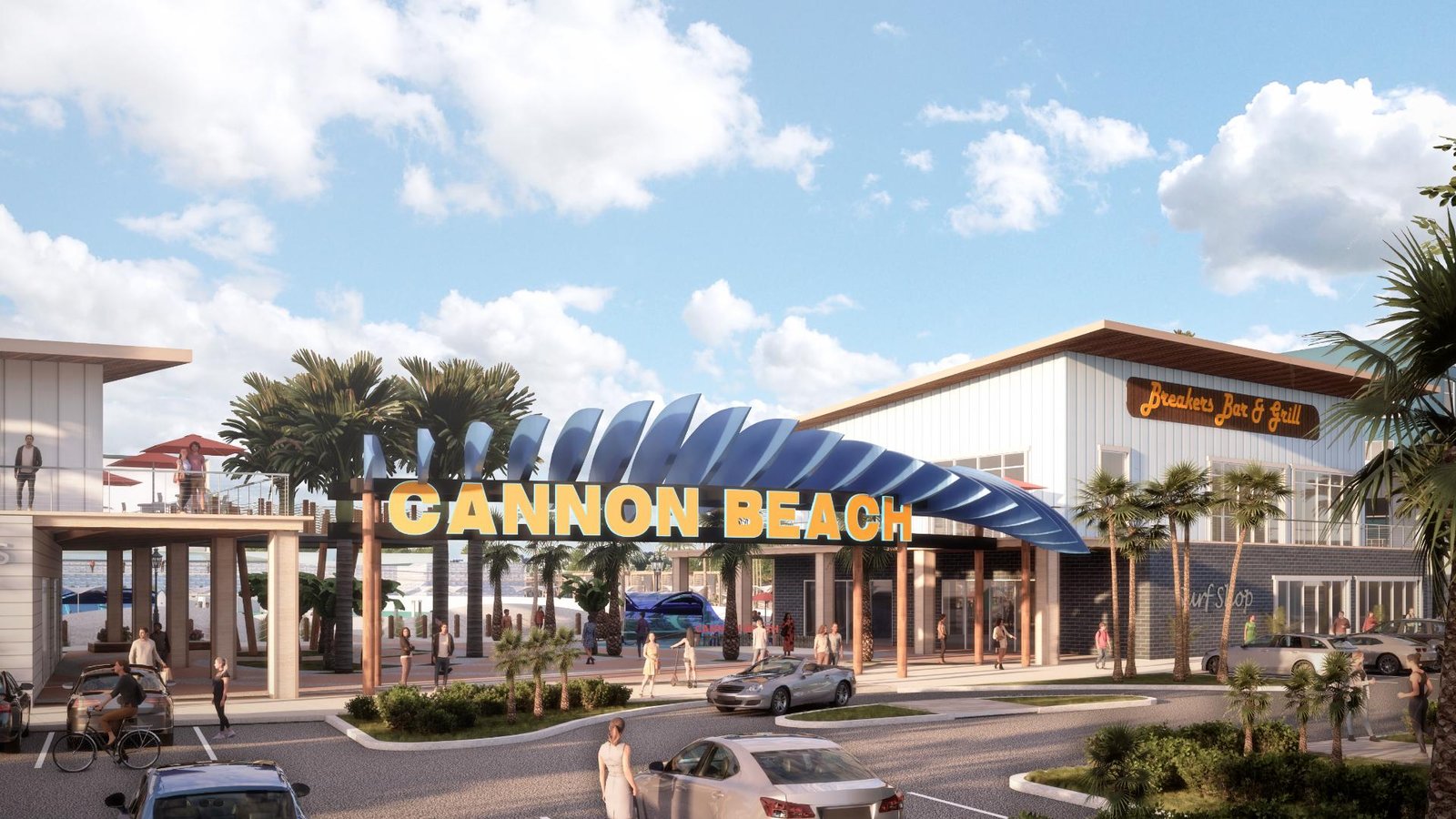
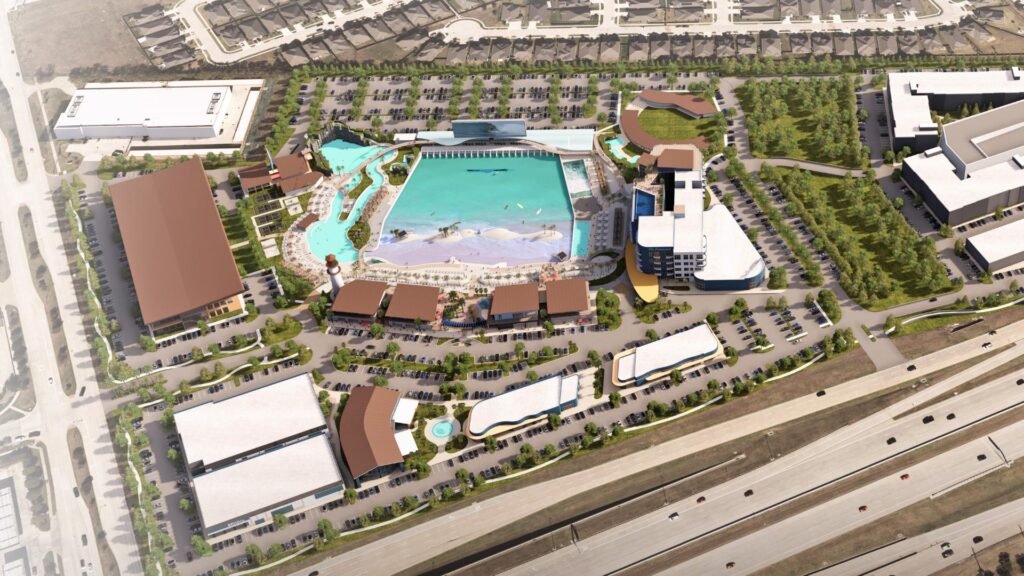
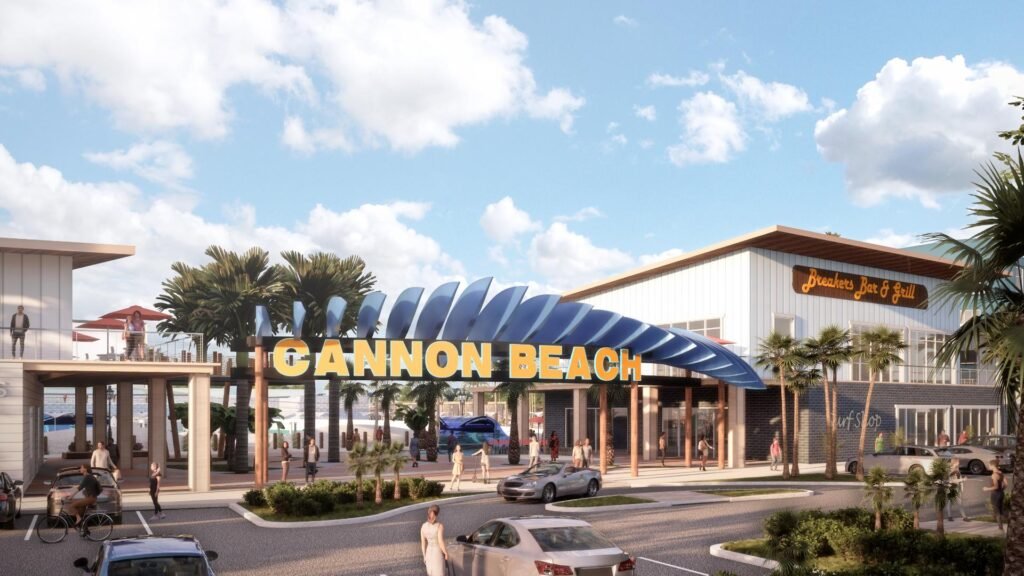
A new surf and adventure resort breaks ground Monday, December 15, 2025 on a $200 million project at the northeast corner of Stacy Road and State Highway 121. The 35-acre development brings a three-acre surf lagoon, full-service resort hotel, and mixed-use entertainment complex to North Texas.
Developer Cole Cannon’s project introduces wave-riding technology to landlocked Collin County through a partnership with the city, the McKinney Economic Development Corporation (MEDC), and the McKinney Community Development Corporation (MCDC). The parties executed development agreements in May 2025 that include infrastructure assistance, tax reimbursements, and land acquisition support.
What the Resort Includes
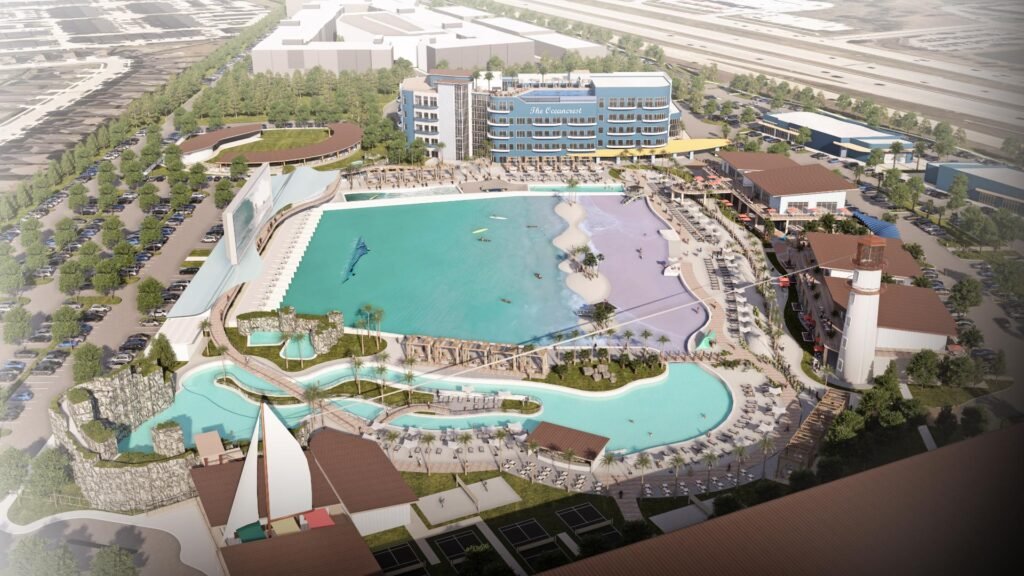
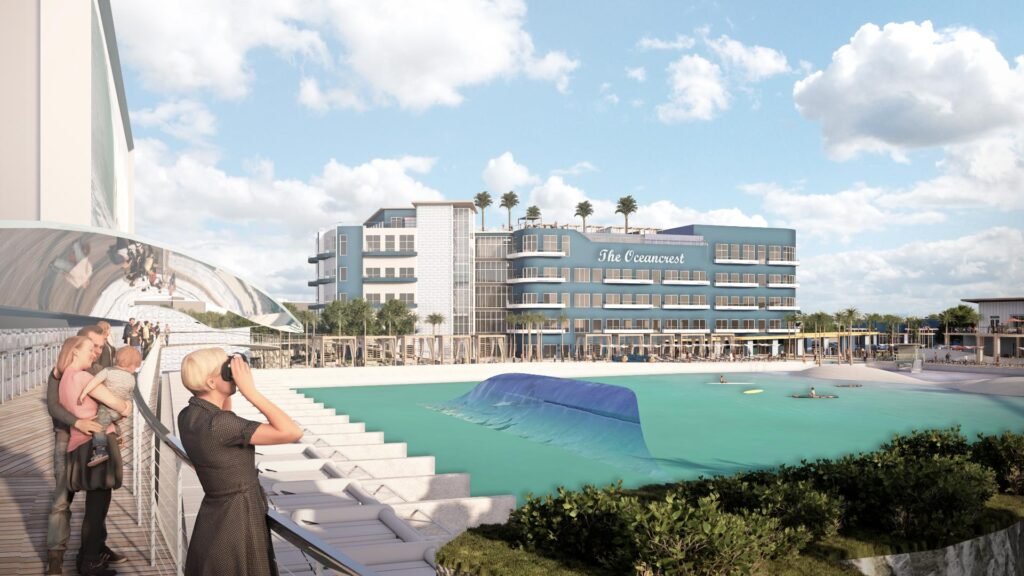
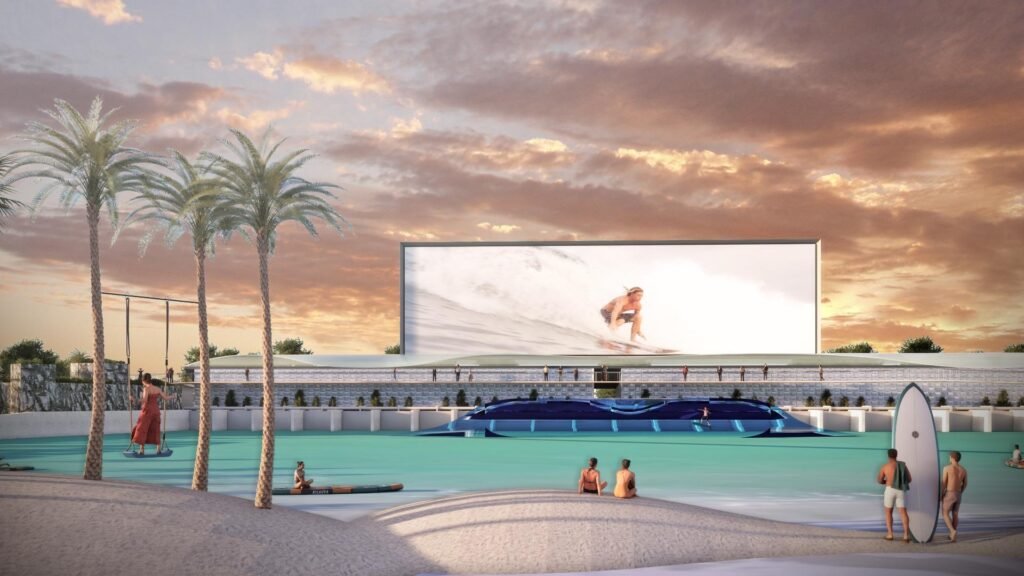
The surf lagoon spans three acres with adjustable wave technology generating heights from three to 10.5 feet. The system uses hydraulics and wave boards to create customized conditions for beginners through experienced surfers. Additional water features include a 17-foot cliff diving pool, lazy river, and mineral hot springs circuit.
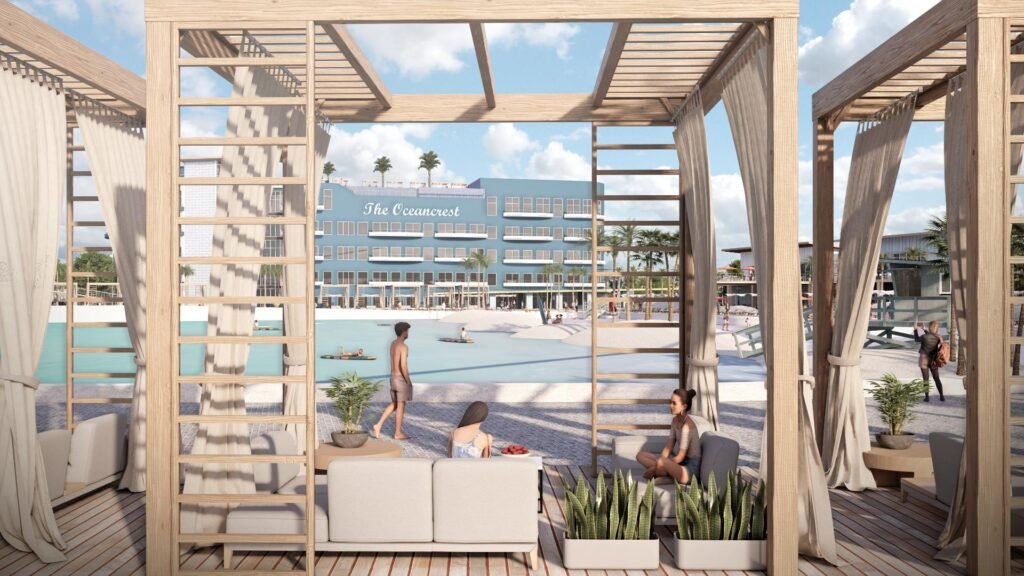
A full-service resort hotel anchors the development with a rooftop pool, wedding and event venues, and direct beach access. Cabanas and lounge areas with food service connect guests to the surf lagoon. The sandy beach will be open to the public with admission fees for beach and surfing access.
Supporting amenities include skateboard park, movie theater, bowling alley, health club, and indoor recreation facilities. The project also delivers 100,000 square feet of office space targeting West Coast companies and technology startups.
Economic Impact and Development Timeline
Cannon Beach McKinney is projected to create more than 700 jobs. The project expects to attract 400,000 visitors annually according to city projections. Over 20 years, McKinney anticipates $2 billion in economic impact from hotel occupancy, retail spending, and business activity generated by Cannon Beach McKinney.
The first phase, featuring the hotel and surf lagoon, targets mid-2027 opening. McKinney Community Development Corporation approved $4 million in infrastructure grants in February 2025 for site preparation. McKinney City Council ratified the funding allocation in June 2025 as part of the fiscal year 2024-25 budget amendments.
Strategic Location in McKinney’s Growth Corridor
The Cannon Beach McKinney site represents one of McKinney’s last major undeveloped parcels along the Highway 121 corridor. The location sits in McKinney’s fastest-growing commercial zone, where population growth continues driving demand for entertainment and mixed-use projects.
McKinney MEDC will sell the land to Cannon Development as part of the economic development corporation’s strategy to maximize returns on city-owned property. Incentive packages include infrastructure improvements, property tax rebates, and land acquisition support tied to performance metrics measuring net community benefit.
The location positions the resort as a gateway development connecting McKinney to the broader DFW metro. Highway 121 provides direct access from Dallas and Fort Worth, while Stacy Road serves as a primary north-south arterial through Collin County’s development corridor.
Land Value Implications for Adjacent Properties
Cannon Beach McKinney’s tourism draw and employment base should elevate surrounding land values. Properties within a half-mile radius gain proximity to 400,000 annual visitors and 700+ employees—demand drivers for retail, hospitality, and service-oriented development.
The 100,000 square feet of office space in Cannon Beach McKinney targets technology and innovation companies. If successful in attracting West Coast firms, surrounding sites become more valuable for office conversions, corporate housing, or business-focused hotels. McKinney’s Innovation Fund program, which awards up to $200,000 in non-diluted capital to startups that locate headquarters in McKinney for three years, adds credibility to this corporate attraction strategy.
Water infrastructure becomes relevant for adjacent developers. The Cannon Beach McKinney surf lagoon uses filtered, recirculated well water chlorinated like a pool, requiring minimal continuous water draw. This water-efficient design reduces strain on municipal systems compared to traditional water parks.
The project follows a model proven in Mesa, Arizona, where Cannon Development Group opened a 40-acre surf lagoon development. That precedent provides performance data on visitor traffic, absorption rates, and spillover retail spending—metrics adjacent landowners can use for feasibility studies on surrounding parcels.
Broader North Texas Entertainment Trend
Cannon Beach McKinney joins a wave of experiential entertainment destinations across North Texas. Fireside Surf in The Colony’s Grandscape development offers surf-focused dining with wave pools. Mosaic in Celina includes lagoon-style amenities in its master-planned community.
McKinney’s entertainment push extends beyond Cannon Beach McKinney. The city approved a $220 million, 20,000-seat amphitheater from Notes Live in November 2024, located on 46 acres at the northeast corner of U.S. 75 and Highway 121. The Sunset Amphitheater represents a potential $3 billion economic impact over 10 years according to city projections.
These projects signal a regional shift toward experiential retail and entertainment—land uses that generate higher tax revenues and employment density than traditional retail. For land professionals, this trend suggests increasing demand for entertainment-anchored mixed-use sites near highway interchanges with strong visibility.
McKinney Mayor Bill Cox emphasized the tourism positioning: “This groundbreaking marks an important moment for our city’s future. The project brings new energy to McKinney, supporting growth that provides residents with more activities to enjoy while opening new avenues for local businesses to serve visitors.”
Monitoring Points for Land Investors
Track phasing announcements and actual opening dates for Cannon Beach McKinney. If Phase 1 hits the mid-2027 target, it validates developer execution and strengthens confidence in projected visitor counts. Delays or scope reductions would signal financing challenges or construction complications.
Watch absorption metrics once Cannon Beach McKinney opens. Are 400,000 annual visitors realistic? Mesa’s Cannon Beach Arizona performance provides a benchmark. If Cannon Beach McKinney exceeds projections, adjacent land values should appreciate faster than surrounding corridor averages.
Monitor which companies lease the 100,000 square feet of office space at Cannon Beach McKinney. Fortune 500 headquarters or recognizable tech names validate McKinney’s corporate attraction strategy. Smaller local tenants suggest the West Coast gateway positioning may need recalibration.
Property tax revenue data will become available 18-24 months after Cannon Beach McKinney opens. Compare actual tax generation against city projections to assess whether the $4 million infrastructure investment and additional incentives delivered return on investment for McKinney taxpayers.
Frequently Asked Questions About Cannon Beach McKinney
When will the resort open?
The first phase of the project, including the surf lagoon and resort hotel, targets a mid-2027 opening. Groundbreaking is scheduled for Monday, December 15, 2025 at 11:00 a.m.
How big is the Cannon Beach McKinney surf lagoon?
The Cannon Beach McKinney surf lagoon spans three acres with wave heights adjustable from three to 10.5 feet. The lagoon includes a 17-foot cliff diving pool, lazy river, and mineral hot springs circuit.
How much did McKinney invest in Cannon Beach?
McKinney Community Development Corporation approved $4 million in infrastructure grants for site preparation. Additional incentives include property tax rebates and land acquisition support tied to performance metrics.
Where is Cannon Beach McKinney located?
The project sits at the northeast corner of Stacy Road and State Highway 121 in south McKinney, Texas. The 35-acre site is owned by McKinney Economic Development Corporation.
How many jobs will Cannon Beach McKinney create?
The development is projected to create more than 700 jobs across hospitality, retail, entertainment, and office sectors. The project expects to generate $2 billion in economic impact over 20 years.
Does Cannon Beach McKinney include residential development?
No. The project is a mixed-use development featuring a resort hotel, office space, retail, and entertainment but no residential units. It focuses on tourism and business activity.
How does Cannon Beach McKinney compare to the Mesa location?
The surf lagoon spans three acres with wave heights adjustable from three to 10.5 feet. The lagoon includes a 17-foot cliff diving pool, lazy river, and mineral hot springs circuit.
Will Cannon Beach McKinney be open year-round?
Yes. The resort hotel, indoor recreation facilities, and office space operate year-round. The outdoor surf lagoon and water features will have seasonal operating hours typical of outdoor aquatic facilities in North Texas.
Cannon Beach McKinney represents the city’s bet on tourism infrastructure as an economic development strategy. The surf lagoon concept leverages landlocked North Texas’s lack of natural water recreation while capitalizing on the region’s population density. For land professionals, Cannon Beach McKinney signals opportunity in entertainment-anchored mixed-use development particularly sites with highway visibility in Collin County’s growth corridor.
Broader North Texas Entertainment Trend
Cannon Beach McKinney joins a wave of experiential entertainment destinations across North Texas. Fireside Surf in The Colony’s Grandscape development offers surf-focused dining with wave pools. Mosaic in Celina includes lagoon-style amenities in its master-planned community.
McKinney’s entertainment push extends beyond Cannon Beach McKinney. The city approved a $220 million, 20,000-seat amphitheater from Notes Live in November 2024, located on 46 acres at the northeast corner of U.S. 75 and Highway 121. The Sunset Amphitheater represents a potential $3 billion economic impact over 10 years according to city projections.
These projects signal a regional shift toward experiential retail and entertainment—land uses that generate higher tax revenues and employment density than traditional retail. For land professionals, this trend suggests increasing demand for entertainment-anchored mixed-use sites near highway interchanges with strong visibility. Major developments like Fields West in Frisco demonstrate how North Texas metros are leveraging entertainment and mixed-use projects to drive economic growth and land appreciation.
McKinney Mayor Bill Cox emphasized the tourism positioning: “This groundbreaking marks an important moment for our city’s future. The project brings new energy to McKinney, supporting growth that provides residents with more activities to enjoy while opening new avenues for local businesses to serve visitors.”
Request a McKinney Market Brief to identify properties positioned for spillover demand from Cannon Beach McKinney, entertainment corridor expansion, or corporate office development in the Highway 121 corridor.