
Table of Contents
Texas operates under open range common law, meaning livestock owners have no default duty to fence animals in. But that legal framework tells only part of the story. Under Texas Agriculture Code Chapter 143, each county, sometimes individual precincts within a county, can adopt local stock laws through voter election, fundamentally changing the fence-in versus fence-out obligations for that area.
For land professionals handling ranch transactions, recreational property, or rural development, understanding whether a tract sits in open or closed range territory directly impacts due diligence, liability disclosure requirements, and buyer underwriting of capital improvements like perimeter fencing.
The Common Law Foundation
Texas livestock law traces back to English common law, but with an American twist. Where English tradition held livestock owners strictly liable for animal trespass, Texas adopted the opposite rule. Livestock owners historically had the right to allow domestic animals to “run at large,” placing the burden on neighboring landowners to fence animals out if they wanted property protection.
This fence-out doctrine remains Texas default law unless modified by statute or local election. The rationale reflected frontier economic reality: in sparsely populated ranching country, it made more sense to require the few cultivators to fence than to impose fencing costs on the many ranchers.
How Chapter 143 Stock Laws Work
Texas Agriculture Code Chapter 143, originally enacted in 1981 but consolidating statutes dating to 1876, gives counties local control over open range status. Subchapters B through D of Chapter 143 authorize separate election procedures for different livestock classes.
Counties can hold elections to adopt stock laws that restrict specific animals from running at large. Section 143.021 governs horses, mules, jacks, jennets, donkeys, hogs, sheep, and goats. Section 143.071 covers cattle and domestic turkeys. Section 143.051 addresses limited free range periods for hogs. Each subchapter has distinct petition requirements and ballot language.
The election process requires freeholder petitions to the commissioners court, which must then order an election with at least 30 days notice. If a majority votes for adoption, the stock law takes effect 30 days after results are proclaimed. From that point forward in the affected area, owners may not knowingly permit covered animals to run at large. Violation constitutes a Class C misdemeanor, with each day as a separate offense.
Geographic and Species Flexibility
Stock law elections can be held countywide or for defined areas within a county. A justice precinct might close the range while the rest of the county remains open. Or a county might close for horses and cattle but leave sheep and goats on open range.
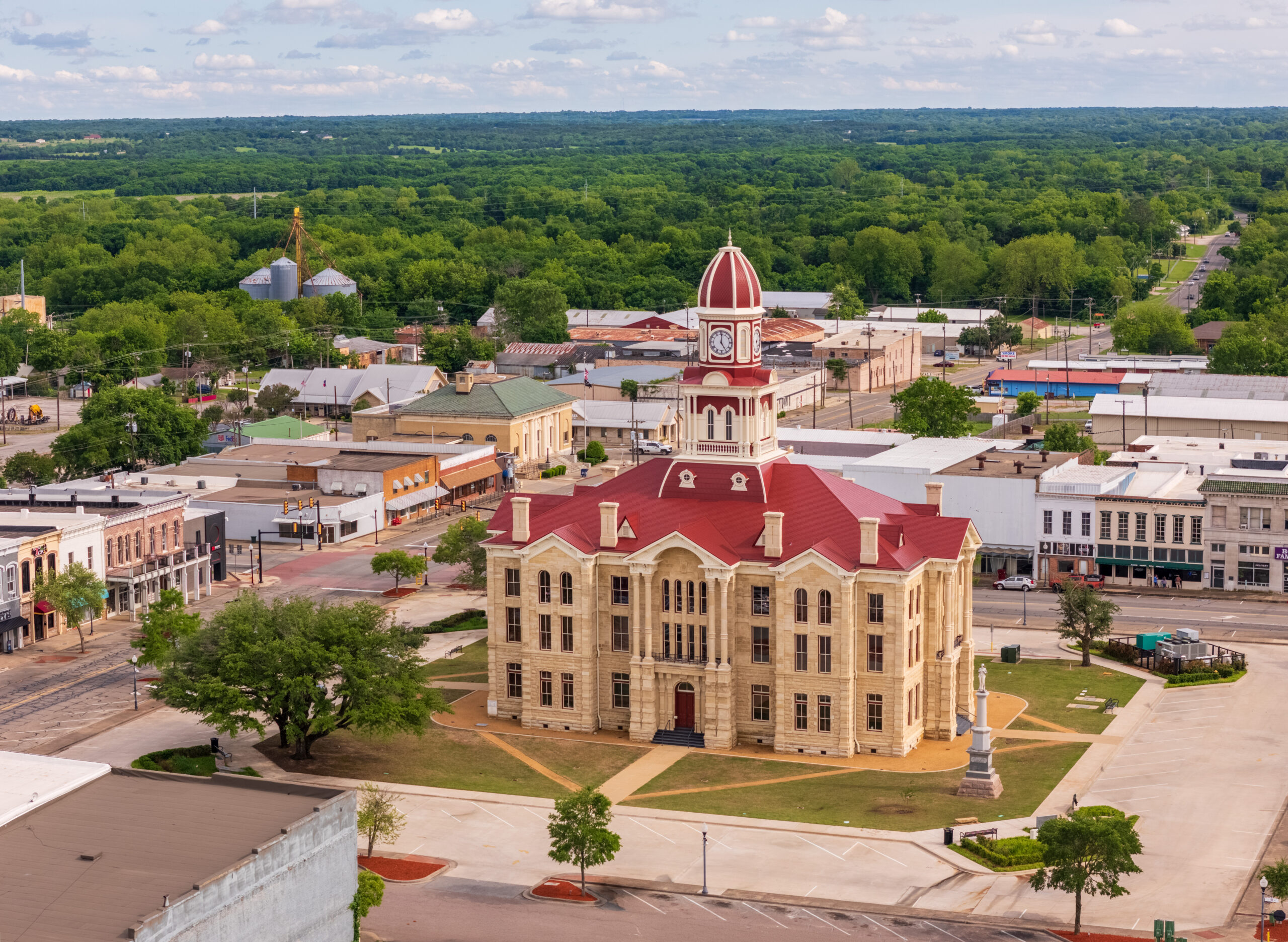
Delta County illustrates this on a granule level. The county adopted stock laws through two 19th century elections: June 24, 1889 for hogs, sheep, and goats; September 18, 1891 extending coverage to horses, mules, jacks, jennets, and cattle. The result is a fully closed range county, but one that arrived at that status through elections covering different species.
The Current Landscape: How Many Counties Remain Open Range?
Understanding Texas open range status requires distinguishing between two separate legal situations:
Counties Statutorily Prohibited from Closing Range for Cattle:
Section 143.072 prohibits 22 specific counties from conducting countywide elections to restrict cattle from running at large: Andrews, Coke, Culberson, Hardin, Hemphill, Hudspeth, Jasper, Jefferson, Kenedy, Kinney, LaSalle, Loving, Motley, Newton, Presidio, Roberts, Schleicher, Terry, Tyler, Upton, Wharton, and Yoakum.
These counties remain open range for cattle at the countywide level by legislative mandate. The restriction is species-specific, these counties can still adopt stock laws for horses, hogs, sheep, or goats. They can also adopt precinct-level or area-specific cattle restrictions where authorized. But they cannot vote to close the range for cattle across the entire county.
Counties That Have Never Adopted Any Stock Law:
Separately, the Texas and Southwestern Cattle Raisers Association reports that as of 2011, only 23 counties remained entirely open range across all species. This means these 23 counties had never held a stock law election for any livestock class, leaving the common law open range rule fully in effect.
These two categories are distinct. The 22 counties listed in Section 143.072 are statutorily locked into open range for cattle specifically, but may have adopted stock laws for other animals. The 23 counties identified by TSCRA as of 2011 had adopted no stock laws whatsoever making them truly “pure” open range counties where the common law fence-out rule applies to all livestock classes.
There is likely overlap between these lists, but they represent different legal situations. A county could be on both lists (statutorily prohibited from cattle stock laws and having never adopted laws for other species), or could be on only one list (prohibited from cattle laws but having adopted laws for horses or hogs).
The vast majority of Texas’s 254 counties have adopted some form of stock law, though the specific animals covered and geographic scope varies widely county by county.
The Highway Exception
Section 143.102 creates a statewide closed range mandate for highways regardless of county stock law status. The statute prohibits owners from knowingly permitting horses, mules, donkeys, cows, bulls, steers, hogs, sheep, or goats to traverse or roam at large, unattended, on the right-of-way of a highway.
Section 143.101 defines “highway” narrowly: a U.S. highway or state highway, but explicitly excluding numbered farm-to-market roads. This carve-out is critical. Texas has over 40,000 miles of farm-to-market roads that remain subject to county open or closed range status, not the statutory highway exception. I admit I find this interesting as TXDOT regulate and usually maintains all FM roads.
The practical effect: even in a pure open range county where cattle can legally roam, allowing animals on Interstate 35 or US Highway 75 violates Section 143.102 and creates potential Class C misdemeanor liability.
Estray Laws Apply Everywhere
Texas Agriculture Code Chapter 142 establishes procedures for handling stray livestock, and these provisions operate independently of open or closed range status. A December 2019 Texas Attorney General Opinion (KP-0278) clarified that county sheriffs have authority and responsibility to enforce estray laws in all counties, whether they have adopted stock laws or not.
The estray framework requires anyone discovering stray livestock to report it to the county sheriff. The sheriff then follows statutory procedures for notice, impoundment, and potential sale. Attempting to keep or sell estray livestock without following Chapter 142 procedures constitutes theft, regardless of whether the county is open or closed range.
This creates an important distinction. In an open range county, neighboring cattle on your property are not “stray” in the legal sense if the owner is allowing them to run at large as permitted by law. But if those same cattle appear on a U.S. highway, they become subject to estray procedures because their presence there violates Section 143.102.
No Official Statewide Registry
Texas A&M AgriLife Extension Service documentation confirms there is no authoritative state-maintained list of which counties have adopted stock laws or for which species. The official record consists of commissioners court minutes and election canvasses held by each county clerk, some dating to the 1880s and 1890s.
Law firms and insurance companies maintain unofficial summary charts as practice tools. The most widely cited is the Matthiesen, Wickert & Lehrer compilation, which notes it reflects “information that is publicly available” and carries disclaimers about accuracy and currency. Attorney Alison Rowe maintains a compilation covering at least 234 counties. These resources provide useful starting points but are not legal records.
The absence of central registry is not oversight it reflects Texas preference for local control and the practical reality that county status can be highly fact-specific. A precinct might be closed while the county is open. Cattle might be restricted while goats roam freely. Multiple elections spanning decades create layered rules that don’t reduce to simple “open” or “closed” labels.
Due Diligence Is Key For Real Estate Professionals
For deal-level analysis, follow this sequence:
Step 1: Identify precise location. Obtain legal description, plat, and verify justice precinct. Stock laws can apply to parts of a county, so knowing “Smith County” is insufficient if the law closed Precinct 3 but not Precinct 4.
Step 2: Contact the county clerk directly. Request confirmation of stock law status under Chapter 143. Provide the legal description or precinct number. Ask specifically: Has this area adopted a stock law? For which species? What are the election dates?
If the clerk cannot answer immediately, they will need to research commissioners court minutes. Many stock law elections occurred between 1910 and 1930, so retrieval may take time. Some clerks have created summary documents; others require archival research.
Step 3: Verify species coverage and scope. Confirm which animals are subject to restriction. Do not assume. A county might have closed for horses and cattle in 1920 but never held a separate election for sheep and goats, leaving those species on open range.
Step 4: Map roadway classifications. Identify whether property abuts U.S. or state highways (subject to Section 143.102) versus farm-to-market roads (subject to county rules) versus county roads or private easements. Different liability regimes apply.
Step 5: Document findings in the file. Confirm status in writing from the county clerk where possible. If county cannot provide definitive answer, recommend buyers obtain legal opinion from local counsel familiar with that county’s election history.
Implications for Real Estate Transactions
Listing and Representation
For ranch listings, stock law status affects marketing positioning and buyer qualification. In closed range counties, buyers know neighboring livestock should be fenced in, reducing property protection costs. In open range areas, buyers must budget for perimeter fencing if they want to exclude livestock, and understand they generally have no legal recourse if unfenced cattle from neighboring ranches enter the property.
Accurate disclosure prevents post-closing disputes. If selling a tract that borders open range county land, buyers need clear warning that livestock may legally cross onto their property and that they bear responsibility for fencing out if desired.
Liability and Insurance
Open range status shifts baseline liability. In fence-out counties, a landowner who fails to fence and then suffers livestock damage to crops or improvements generally has no claim against the livestock owner. The obligation was on them to fence out.
In fence-in counties under stock laws, the livestock owner has a duty to prevent animals from running at large. Failure to do so that results in damage may create liability.
Section 143.103 adds complexity for motor vehicle collisions. The statute provides immunity from liability for motorists whose vehicles strike unattended animals running at large on a highway but only if the motorist can establish the animal violated Section 143.102. This creates technical distinctions based on highway classification and county stock law status that matter significantly in casualty claims.
Capital Improvement Underwriting
Fencing requirements directly affect development pro formas. A 640-acre ranch purchase in an open range county may require $40,000-$85,000 in perimeter fencing for basic barbed wire or woven wire systems to protect improved pastures or enable rotational grazing operations. In a closed range county with the same external property boundaries, that capital expenditure may not be necessary because neighbors are legally obligated to fence in. (The cost is assuming $1.25 to $6 per linear foot installed)
Market Context
The local control framework has been Texas law since 1876 and shows no signs of centralization. The Legislature has consistently declined to create statewide registries or uniform standards, reflecting preference for allowing communities to set rules matching their land use patterns and ranching traditions.
For land professionals, this means research responsibility remains county-level and relationship-based. Developing working relationships with county clerks in primary market areas, maintaining transaction notes on county-specific status, and building referral networks with local counsel familiar with historical election records all become practice infrastructure.
The trend over the past century has been toward selective stock law adoption, often closing the range in populated areas while leaving rural precincts open, or closing for certain species while leaving others unrestricted. This creates the complex patchwork that defines modern Texas fence law.
Request a Rural Land Market Brief to identify Texas counties with specific stock law configurations and assess how open or closed range status affects development opportunity, fencing capital requirements, and liability exposure for target properties in your market.
References and Sources
Texas Statutes
Texas Agriculture Code Chapter 142 – Estrays
https://statutes.capitol.texas.gov/Docs/AG/htm/AG.142.htm
Texas Agriculture Code Chapter 143 – Fences; Range Restrictions
https://statutes.capitol.texas.gov/Docs/AG/htm/AG.143.htm
Texas Agriculture Code Section 143.072 – Exceptions; Countywide Elections
https://texas.public.law/statutes/tex._agric._code_section_143.072
Texas Agriculture Code Section 143.101 – Definition (Highway)
https://texas.public.law/statutes/tex._agric._code_section_143.101
Texas Agriculture Code Section 143.102 – Running at Large on Highway Prohibited
https://law.justia.com/codes/texas/agriculture-code/title-6/subtitle-b/chapter-143/subchapter-e/section-143-102/
Texas Attorney General Opinions
Texas Attorney General Opinion No. KP-0278 (December 4, 2019)
Re: Authority of county sheriff to enforce estray laws in open range counties
Note: Direct PDF link currently unavailable. Search “KP-0278” at https://www.texasattorneygeneral.gov/opinions
Government and University Resources
Texas A&M AgriLife Extension Service – Open or Closed Range
Note: PDF link may be temporary. Contact Texas A&M AgriLife Extension for current publications.
Texas A&M Agriculture Law Blog – “Texas Fence Law: Open Range….or Not? (Part 1)”
https://agrilife.org/texasaglaw/2014/05/19/texas-fence-law-open-range-or-not-part-1/
Texas A&M Agriculture Law Blog – “TX Attorney General Opinion: Estray Laws Apply in All Counties”
https://agrilife.org/texasaglaw/2020/02/24/tx-attorney-general-opinion-estray-laws-apply-in-all-counties/
Texas State Law Library – Livestock Guide
https://guides.sll.texas.gov/animal-law/livestock
Texas Association of Counties – Stock Laws Legal Publication
Note: Direct link may require member access. Contact TAC at https://www.county.org for publications.
Texas Association of Counties – Animals FAQ
https://www.county.org/resources/news/legalease-faqs-by-subject/animals
County Resources
Delta County, Texas – Stock Laws Information
Note: County website access may be restricted. Contact Delta County Clerk directly at (903) 395-4400 for stock law information.
Industry Organizations
Texas and Southwestern Cattle Raisers Association – Livestock Laws
https://tscra.org/what-we-do/theft-and-law/livestock-laws/
Legal Reference Materials
Matthiesen, Wickert & Lehrer, S.C. – “Texas Stock Laws By County Chart”
https://www.mwl-law.com/resources/texas-stock-laws-by-county/
Alison Rowe, Attorney at Law – Compilation of Texas Stock Laws
http://equinelaw.alisonrowelaw.com
1800LIONLAW – “Liability In Texas Livestock Accidents: Stock Laws By County”
https://1800lionlaw.com/texas-livestock-accidents/
Academic and Legal Analysis
“Dispelling the Myths of Stock Laws and Overview of Livestock Open Range and Fencing Laws”
https://stpra.org/wp-content/uploads/2020/10/Eyssen-Stock-Laws1.pdf
Note for Readers: Stock law status can change through local elections, and the information in this article reflects the legal framework as of January 2025. For definitive stock law status in a specific county or area, contact the county clerk’s office directly and request confirmation based on historical election records. The Texas Agriculture Code is available at https://statutes.capitol.texas.gov.
IMPORTANT: Some government PDF links and county websites may have restricted access or temporary URLs. For the most reliable information, contact the relevant county clerk’s office directly or consult with a local attorney familiar with Texas livestock law.
If you made it the far make certain to check out Restricted vs Unrestricted when it comes to buying land.