Table of Contents
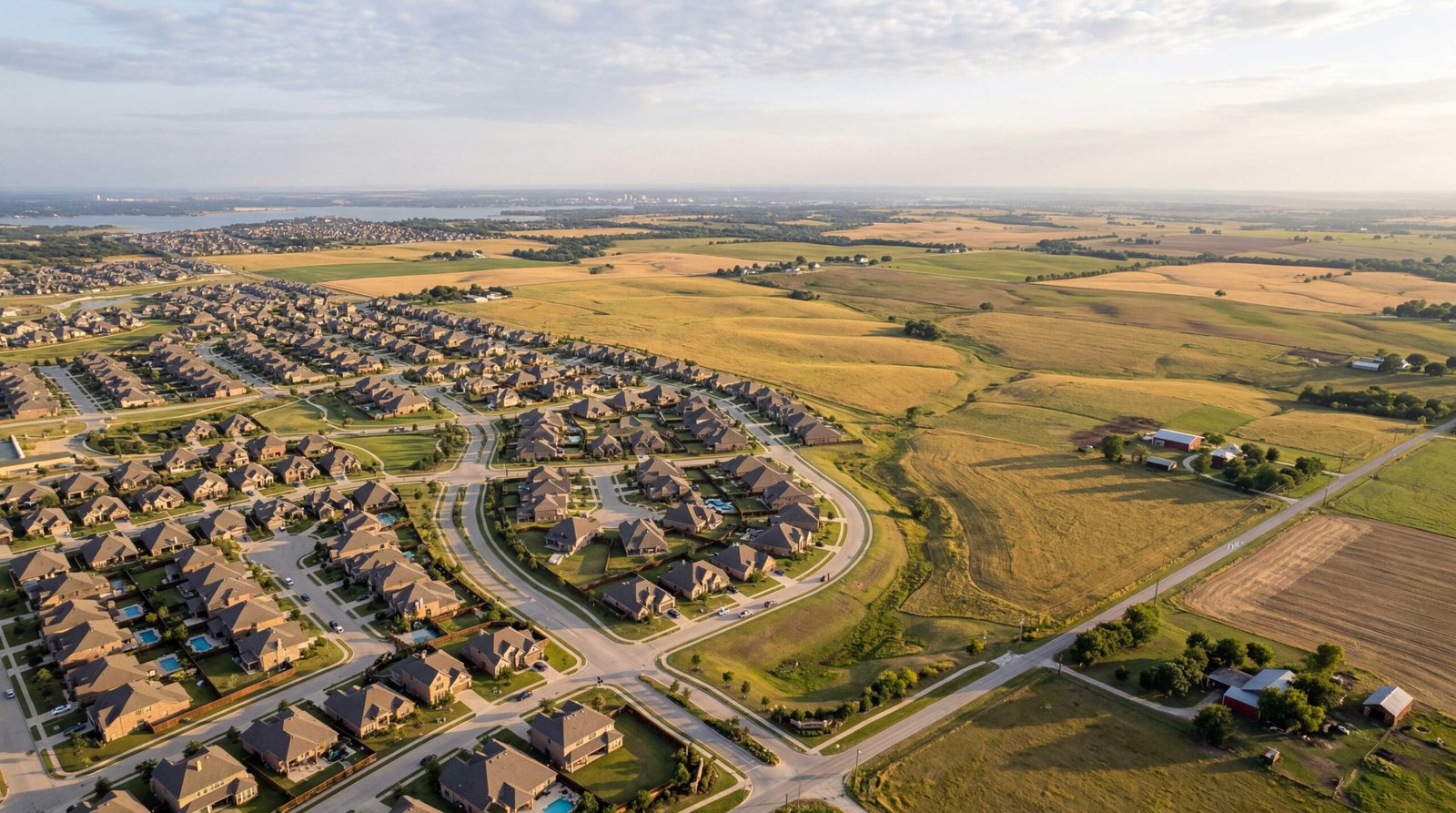
For decades, the Texas Real Estate Research Center tracked rural land as a single market. Large ranches, small acreage, exurban parcels all measured together, all modeled the same way. That approach made sense when big tracts dominated transaction counts. It does not anymore.
Texas small land tracts now account for more than half of all rural land sales statewide. In April 2026, TRERC published “The Big Plan for Small Land,” a new study by researchers Tian Su, Ph.D. and Lynn D. Krebs, Ph.D. that officially splits the forecasting model in two. NTREIS transaction data from the past three years tells the same story from a North Texas ground level. The data points in the same direction: this market has its own logic, its own pricing, and its own rhythm.
Why the Old Model Missed the Texas Small Land Tracts Story
TRERC’s original forecasting framework treated rural land like an investment asset. That framing works when you are analyzing 500-acre ranches purchased by cash buyers. Those transactions move in sync with Texas personal income, oil prices, and interest rate cycles.
Texas small land tracts behave differently. The buyers are different. A family looking for 20 acres outside Sherman is not making the same decision as a 1031 exchange investor acquiring a Hill Country ranch. A first-generation landowner in Hunt County is not reading crude oil futures before signing a contract.
TRERC recognized this and built a separate model specifically for Texas small land tracts, generally those under 50 acres depending on the region. The shift is not cosmetic. It reflects a structural change in who is buying land in Texas and why.
What the Data Shows
The statewide numbers behind this decision are stark. In the mid-1960s, Texas small land tracts made up roughly 20 percent of all rural land sales by transaction count. By 2024, that figure had crossed 55 percent. Over the last decade alone, small tracts have consistently represented 55 to 60 percent of total annual statewide sales.
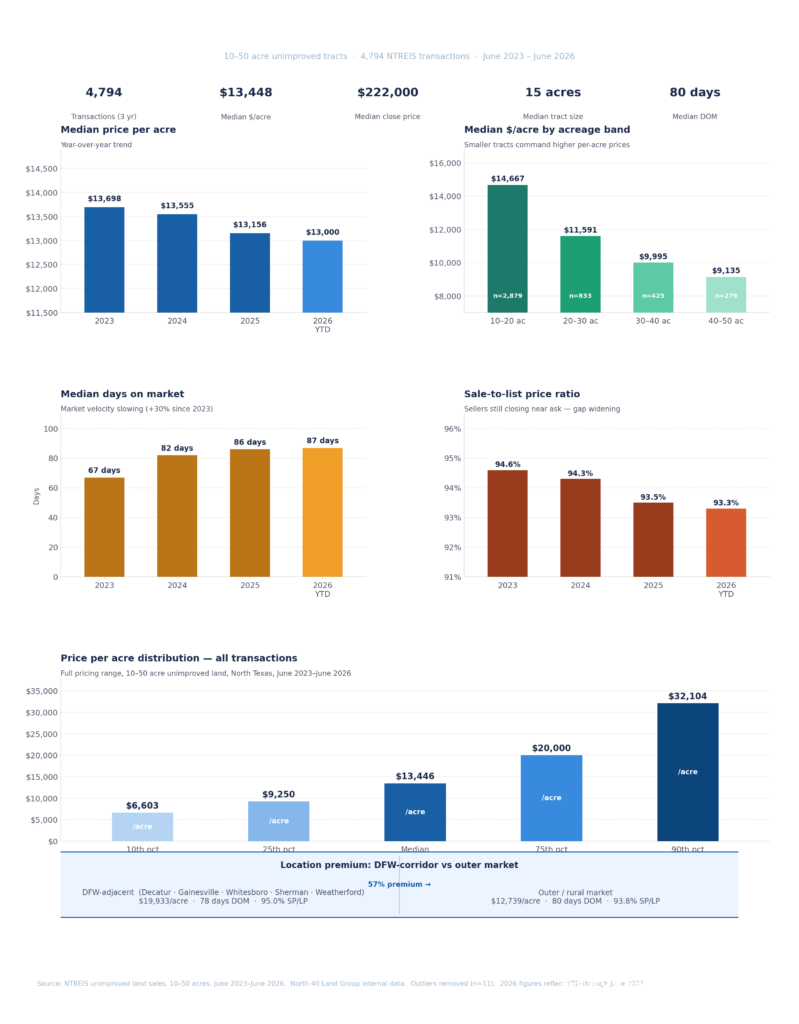
The North Texas numbers confirm it at ground level. Across NTREIS-reported sales of unimproved 10-to-50-acre tracts over the past three years, 4,794 transactions closed between June 2023 and June 2026. That is an active, liquid segment of the market, not a niche.
The median tract size in that dataset: 15 acres. The median close price: $222,000. The median price per acre across all three years: $13,448.
These are not abstract research figures. They are the transactions that actually happened in counties like Wise, Cooke, Ellis, Kaufman, and Erath.
What the New TRERC Model Actually Tracks
TRERC scoped the new small-tract model to Regions 3 through 7, covering Central Texas, the Hill Country, South Texas, East Texas, and the DFW corridor and surrounding counties.
Regions 1 and 2 were excluded by design. Region 1 is dominated by agricultural production. Texas small land tracts in that region are typically purchased to expand existing farming operations, not for the lifestyle and investment demand the model is designed to measure. Region 2 has too few transactions and its land use is primarily tied to agriculture or energy extraction.
For North Texas, this scope matters directly. Collin, Grayson, Hunt, Fannin, and the counties ringing the DFW metro fall inside the study’s geographic range. The model is built to explain what is happening in markets like ours.
Supply side: When more Texas small land tracts sold in recent months, available inventory shrinks and prices move up. Oil prices also carry a modest positive effect through regional income and development pressure.
Demand side: Higher prices reduce buyer activity, but that effect softens when Texas personal income is rising. When income growth slows, price sensitivity increases sharply.
Interest rate increases reduce demand, but the effect shows up with roughly a 12-month lag. The rate increases of 2022 and 2023 are still working through the small-tract market now.
The pandemic temporarily shifted demand for Texas small land tracts upward through remote work, lifestyle migration, and rural living interest. But buyers also became more price-sensitive during that same period. The pandemic raised demand levels and sharpened cost awareness at the same time.
North Texas Sold Data: What Three Years of Transactions Tell You
TRERC builds the macro model. The NTREIS transaction record is the field report. Three findings from the North Texas data directly validate and extend what TRERC is measuring:
Texas small land tracts command sharply higher per-acre prices as acreage decreases. The TRERC model predicts this based on buyer pool dynamics. The transaction data confirms it with precision. In North Texas, 10-to-20-acre tracts closed at a median of $14,627 per acre over the three-year period. Move to the 40-to-50-acre band and that figure drops to $9,152 per acre, a 37 percent discount. The 10-to-20-acre segment also represents 60 percent of all transactions, meaning demand is concentrated exactly where per-acre prices are highest.
The market is softening on velocity, not collapsing on price. Median price per acre peaked in 2023 at $13,698 and has eased to $13,000 through mid-2026, a 5 percent decline over three years. That is moderation, not a correction. What has shifted more meaningfully is market velocity. Median days on market went from 67 in 2023 to 87 in mid-2026, a 30 percent increase. The sale-to-list price ratio compressed from 95 percent to 93 percent over the same period. Sellers are still getting close to asking, but the negotiation window has widened.
Location premium is real and measurable. DFW-adjacent corridor cities, including Decatur, Gainesville, Whitesboro, Sherman, and Weatherford, produced a median price of $19,933 per acre versus $12,739 per acre for outer-market transactions, a 57 percent location premium. The cities producing the most transactions above $20,000 per acre were Decatur, Whitesboro, Gainesville, Waxahachie, and Farmersville. These are not random. They sit along commute corridors or in county seats with improving infrastructure.
What This Means for Buyers
If you are targeting Texas small land tracts in the 10-to-50-acre range across North Texas, the combined TRERC and NTREIS data gives you a clearer read than either source alone.
Rate sensitivity is real but delayed. A rate cut today will not immediately reduce competition at the contract table. The market adjusts on a lag. Buyers who move during that adjustment window often face less competition than buyers who wait for rate relief to fully play out in asking prices.
The 93-percent SP/LP ratio and 87-day median DOM mean you have more room to negotiate than the 2021 and 2022 market allowed. Do not confuse slower velocity with distressed pricing. Median prices have barely moved. Sellers are not panicking, they are waiting.
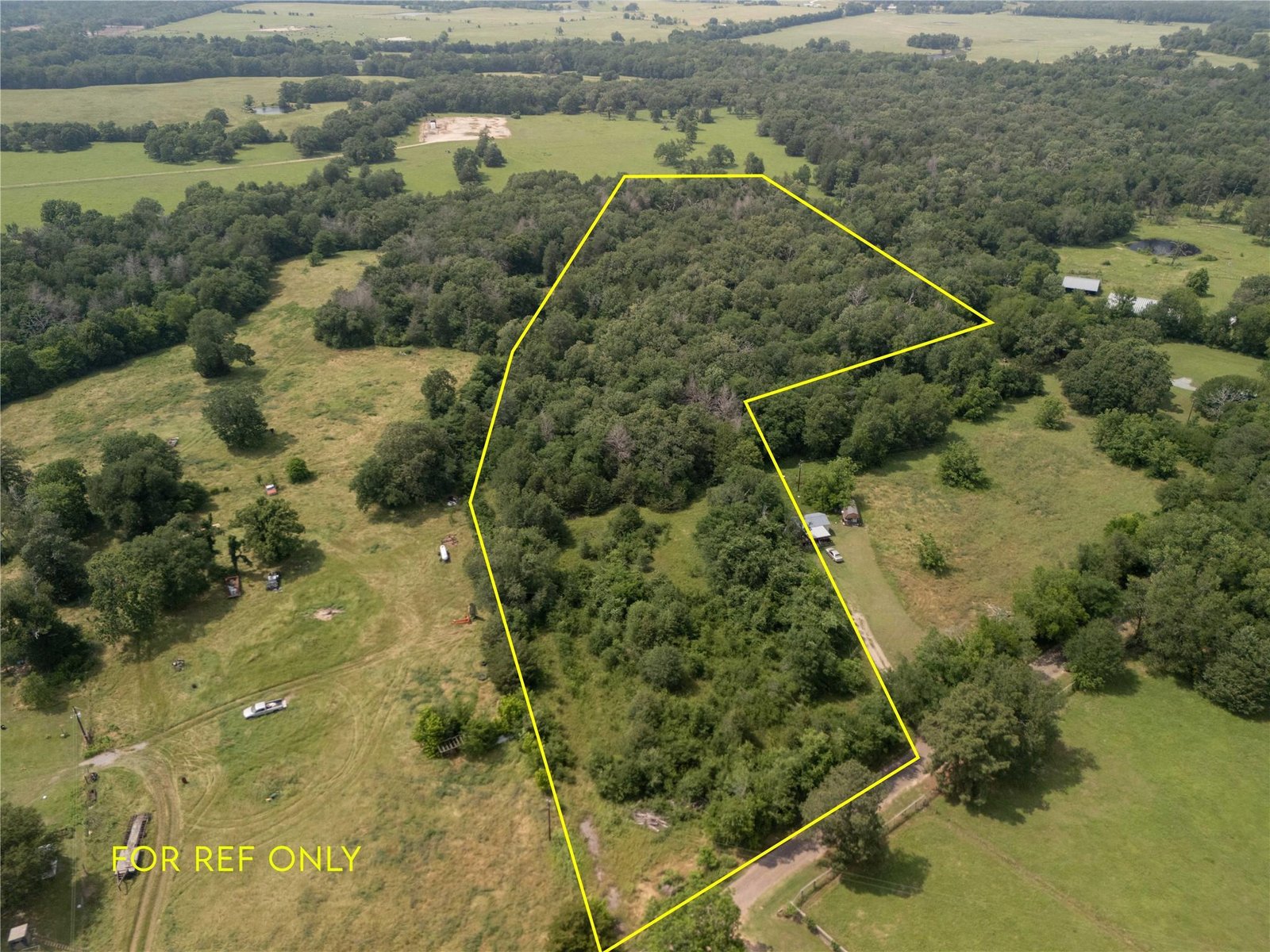
Well-located Texas small land tracts with water access, road frontage and legal access rights, and perimeter fencing continue to move faster than the median.
What This Means for Sellers
The most important number for sellers in this data is not the price per acre. It is the DOM trend. Three years ago, a well-priced 15-acre tract in this market found a buyer in 67 days at 95 percent of list. Today, similar tracts are sitting 87 days and closing at 93 percent of list. That is not catastrophic. But it means pricing needs to be sharper from day one.
The TRERC income-modulates-price-sensitivity model explains what is driving this. Texas personal income growth is not keeping pace with the asking price levels anchored to the 2021 and 2022 peak. Buyers can still absorb land costs. They are just more deliberate about how much they will stretch.
Texas small land tracts in corridor locations, the DFW-adjacent band, are holding price better than the broader market. If you are selling in Wise, Cooke, Collin, or Ellis counties, you are operating in a different pricing environment than sellers in more rural counties to the east or south. Price accordingly.
What Comes Next
TRERC plans to begin publishing dedicated small-tract forecasts by the end of 2026. That means regional data with price and volume projections specific to the small-parcel market, separate from large-tract transactions that move on different timelines.
For buyers and sellers working in the Texas small land tracts segment, 10 to 100 acres across North Texas, this is a meaningful upgrade. A dedicated TRERC forecast layered on top of live transaction data like the NTREIS record gives you the pricing confidence that has been missing since the 2021 peak distorted everyone’s benchmarks.
The Takeaway
Texas small land tracts are not a subset of the rural land market anymore. They are the market. More than half of all transactions statewide. Sixty percent of North Texas NTREIS unimproved land volume concentrated in the 10-to-20-acre band. Prices holding in a tight range even as velocity softens.
TRERC building a separate forecasting model for this segment is a formal acknowledgment that the market operates on its own logic. The North Texas transaction record over the past three years makes the same case from the ground up.
If you are buying or selling in Collin, Grayson, Hunt, Wise, Cooke, Ellis, or surrounding North Texas counties, we track both the TRERC data and the live transaction record. Reach out to the North 40 Land Group team to talk through what the numbers mean for your specific situation.
Frequently Asked Questions About Texas Small Land Tracts
What qualifies as a Texas small land tract? TRERC defines Texas small land tracts by establishing a maximum acreage per region, with a minimum of 10.01 acres statewide. In most North Texas regions, small tracts are generally those under 50 acres. The upper boundary varies by region based on typical transaction sizes.
Why do Texas small land tracts sell for more per acre than large tracts? More buyers can qualify financially for smaller parcels, which increases competition and supports higher per-acre prices. The North Texas NTREIS data confirms this directly: 10-to-20-acre tracts closed at a median of $14,627 per acre versus $9,152 per acre for 40-to-50-acre tracts over the past three years.
How do interest rates affect small land tract prices in Texas? Higher rates reduce demand, but the effect typically shows up 9 to 12 months after rate increases. Buyers adjust their financing decisions slowly. Current market conditions often reflect rate decisions made a year earlier.
What is the median price per acre for North Texas unimproved land right now? Based on NTREIS transactions through mid-2026, the median price per acre for 10-to-50-acre unimproved tracts is approximately $13,000. DFW-corridor locations are tracking closer to $20,000 per acre. Outer-market rural parcels are closer to $12,700.
When will TRERC publish a dedicated Texas small land tracts forecast? TRERC has announced plans to begin publishing small-tract forecasts by the end of 2026, with regional breakdowns covering Regions 3 through 7 in Texas.
Sources: “The Big Plan for Small Land,” Texas Real Estate Research Center, April 2026. Tian Su, Ph.D. and Lynn D. Krebs, Ph.D. | “The Shifting Dynamics of Small and Large Land Tracts,” TRERC, March 2026. Lynn D. Krebs, Ph.D. | NTREIS unimproved land sales data, 10-50 acres, June 2023 – June 2026.
References
1. Su, Tian, Ph.D. and Krebs, Lynn D., Ph.D. “The Big Plan for Small Land.” Texas Real Estate Research Center, Texas A&M University. April 22, 2026. https://trerc.tamu.edu/article/the-big-plan-for-small-land/
2. Krebs, Lynn D., Ph.D. “The Shifting Dynamics of Small and Large Land Tracts.” Texas Real Estate Research Center, Texas A&M University. March 19, 2026. https://trerc.tamu.edu/blog/the-shifting-dynamics-of-small-and-large-land-tracts/
3. North Texas Real Estate Information Systems (NTREIS). Unimproved land sales, 10–50 acres, June 2023–June 2026. Data accessed via North 40 Land Group. (Proprietary MLS data — no public URL)