The Texas data center boom has moved well past the announcement stage. The deals are signed, the acreage is committed, and the counties getting targeted are ones most land investors weren’t watching two years ago.
Google. Meta. Alphabet. Texas Pacific Land. The commitments keep growing, and the dollar figures are unprecedented. What started as a tech infrastructure story has become a land story, and anyone working rural Texas markets needs to understand the shift.
Google’s $40 Billion Bet Defines the Scale
In November 2025, Google announced a $40 billion investment in three new Texas data centers, making Texas the company’s largest single-state commitment in its history. The facilities are slated for Armstrong County and Haskell County, two rural Panhandle counties that rarely appear in commercial real estate headlines.
One of the Haskell County facilities will be paired with a solar and battery storage plant. That pairing is significant. It signals that data center developers are not just acquiring land near existing power infrastructure. They are building power infrastructure alongside the land purchase, which changes what “valuable” rural land looks like going forward.
Armstrong County has a population of roughly 1,900. Haskell County sits under 6,000. These are not suburban expansion markets. They are rural Texas, and they just became anchors for one of the largest private infrastructure investments in state history. The Texas data center boom, in this case, is arriving in places where local economies have historically depended on agriculture and oil.
Major Deals Stacking Up Across Texas
Google’s announcement is the headline, but it sits alongside a pattern of commitments that makes clear the Texas data center boom is a statewide event, not a corridor story.
Meta committed $1.5 billion to a 1,000-acre AI data center campus in northeast El Paso, breaking ground in October 2025. The facility represents Meta’s third Texas data center campus and will use closed-loop liquid cooling with an estimated 100 employees on site. At 1,000 acres, the land commitment alone signals how much acreage this wave of development actually requires.
Alphabet closed its $4.75 billion acquisition of Intersect Power, an energy and data center infrastructure company with two Texas Panhandle facilities. One is located in Gray County near Pampa, the other in Roberts County near Miami. The acquisition adds multiple gigawatts of capacity and multiple in-development Texas projects to Alphabet’s holdings.
1606 Corp executed a purchase agreement for a 132-acre property in Lufkin that includes an existing power generation facility and a 50,000-square-foot warehouse suited for immediate data center conversion. Closing is expected in mid-April 2026. Nacogdoches County has not historically been associated with tech infrastructure, but a site with captive power generation and conversion-ready square footage now commands a different kind of attention.
Texas Pacific Land Corporation, one of the state’s largest landowners with approximately 882,000 acres in the Permian Basin, is pursuing AI-focused data center and power generation projects across its West Texas holdings. TPL’s shift from oil, gas, and water revenue toward digital infrastructure is a leading indicator. When the most land-sophisticated operators in Texas start repositioning acreage toward data center use, the Texas data center boom has structural legs.
Power Proximity Is the New Land Premium
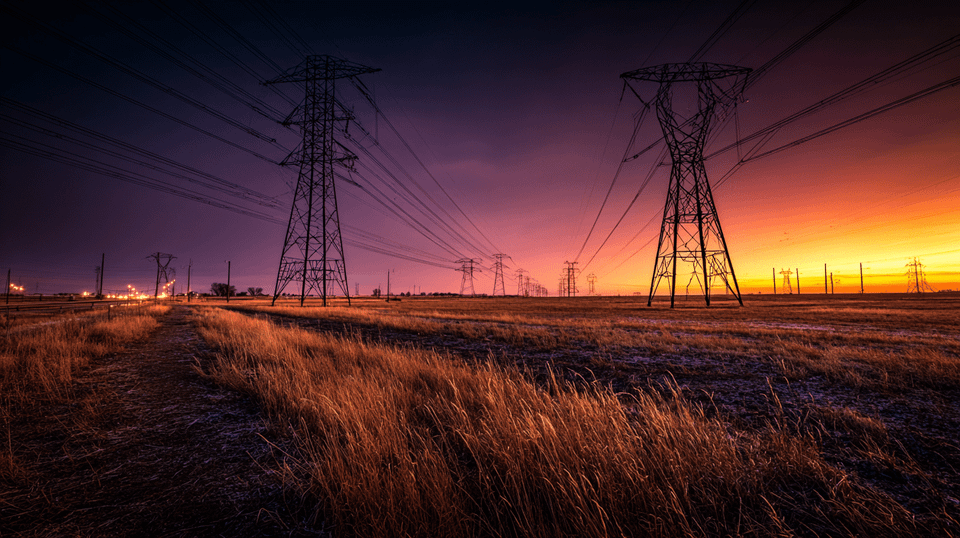
The Texas data center boom is creating a distinct new land category: acreage with power proximity.
Developers are looking for sites that can support high-density power delivery, accommodate large physical footprints, and in some cases, sit near renewable generation. That combination used to describe utility and energy project sites. Now it describes data center acquisitions.
The Lufkin deal illustrates the point precisely. A 132-acre East Texas site with an attached power plant is worth something fundamentally different today than it was five years ago. The power generation facility is not a liability. It is the primary asset driving the transaction.
For land professionals, this creates both opportunity and a due diligence challenge. Properties priced as agricultural, industrial, or raw rural land may carry unrealized upside if they sit near power infrastructure corridors. Identifying that upside requires understanding what data center site selectors are actually evaluating.
Constraints That Will Determine Which Projects Get Built
The Texas data center boom is not without friction. A 2026 CBS Texas investigation found that data centers could consume between 29 and 161 billion gallons of water annually in Texas by 2030. Over 220 gigawatts of projects have applied to connect to ERCOT, representing a significant grid connection backlog.
Hood County is where that friction is most visible. A proposed 2,600-acre, 5-gigawatt development near Tolar, known as Comanche Circle, has drawn sustained local opposition. Residents have focused specifically on protecting the Upper Trinity Aquifer recharge zone from large-scale industrial conversion.
Water rights, grid access, and community opposition are the variables that will determine which projects actually get built. For land sellers and developers, the entitlement story around a data center site carries as much weight as the acreage itself.
For more on water rights check out our recent article: Empowering Landowners: Texas Groundwater Rights Explained
What Land Professionals Should Watch in 2026
The Texas data center boom is accelerating rather than plateauing. Several patterns are worth monitoring:
- Paired energy projects. Solar, battery storage, and wind co-location is becoming standard for large campuses. Land near existing renewable generation carries new leverage in site selection.
- Secondary market penetration. Armstrong, Haskell, Roberts, Nacogdoches. The counties being targeted are moving away from the DFW and Houston corridors into genuinely rural markets.
- Water as a gating factor. Sites with private water rights or access to non-municipal supply are drawing attention that was not present 18 months ago.
- Large landowner repositioning. TPL’s strategic shift toward digital infrastructure is a signal. Expect other large West Texas landowners to evaluate similar plays as the Texas data center boom continues to expand into the Permian Basin.
The land professionals who get ahead of this cycle are mapping power infrastructure against rural acreage now, before the next major commitment is announced.
Tracking data center expansion in your target market? Contact our team to discuss how infrastructure investment is affecting land values in your area.
Frequently Asked Questions
What is driving the Texas data center boom?
he primary driver is demand for AI computing infrastructure, which requires large land footprints, significant power capacity, and in many cases, access to water for cooling. Texas offers a combination of available rural acreage, a deregulated energy market through ERCOT, favorable tax conditions, and geographic diversity that makes it attractive to major technology companies.
Which Texas counties are seeing the most data center activity?
Activity is concentrated in the Texas Panhandle (Armstrong, Haskell, Gray, and Roberts counties), El Paso County in West Texas, and Nacogdoches County in East Texas. DFW-area counties continue to see commercial data center development as well. The notable trend is that rural and historically agricultural counties are now primary targets alongside established metro corridors.
How does data center development affect rural land values?
Land near power infrastructure, transmission corridors, and renewable energy generation is commanding increased attention from site selectors. Properties that were priced as agricultural or industrial land may carry unrealized value if they meet data center siting criteria. The key variables are power delivery capacity, land mass, water access, and proximity to grid interconnection points.
What are the biggest obstacles to data center development in Texas?
Water availability, ERCOT grid connection backlogs, and local opposition are the primary constraints. CBS Texas reported in 2026 that statewide data center water consumption could reach between 29 and 161 billion gallons annually by 2030. Over 220 gigawatts of projects are in the ERCOT interconnection queue, creating significant delays for new developments.
Is the Texas data center boom expected to continue?
Current commitments from Google, Meta, Alphabet, and Texas Pacific Land Corporation suggest the build-out cycle extends well into the latter half of this decade. However, the pace of actual construction will depend on grid interconnection approvals, water permitting outcomes, and community land use decisions at the county level.
References
- Texas Tribune. “Texas Google Data Centers AI.” November 14, 2025. https://www.texastribune.org/2025/11/14/texas-google-data-centers-ai/
- El Paso Matters. “Meta El Paso Texas Data Center Water Electricity Borderplex Alliance.” October 15, 2025. https://elpasomatters.org/2025/10/15/meta-el-paso-texas-data-center-water-electricity-borderplex-alliance/
- My High Plains. “Google Buys Energy Company Behind Two Texas Panhandle Data Centers.” 2026. https://www.myhighplains.com/news/local-news/google-buys-energy-company-behind-two-texas-panhandle-data-centers/amp/
- Globe Newswire. “1606 Corp Signs Agreement to Acquire Data Center Ready Property with Captive Power on 132 Acres.” March 17, 2026. https://www.globenewswire.com/news-release/2026/03/17/3257066/0/en/1606-Corp-Signs-Agreement-to-Acquire-Data-Center-Ready-Property-with-Captive-Power-on-132-Acres.html
- Simply Wall St. “Texas Pacific Land Explores AI Data Centers as New Revenue Stream.” 2026. https://simplywall.st/stocks/us/energy/nyse-tpl/texas-pacific-land/news/texas-pacific-land-explores-ai-data-centers-as-new-revenue-s/amp
- CBS News Texas. “Is Texas Ready for the Fast Approaching Data Center Boom?” 2026. https://www.cbsnews.com/texas/news/is-texas-ready-for-the-fast-approaching-data-center-boom/