Texas landowners with 5 to 20 acres can slash property taxes through beekeeping agricultural exemptions. Since 2012, the state has recognized managed honeybee colonies as qualifying agricultural use under Texas Tax Code Chapter 23, Subchapter D, Section 23.51.
The financial impact varies by property value and county but can be dramatic. Landowners commonly report property tax reductions of 90% or more. One documented Hays County case showed annual savings of approximately $18,000, with taxes dropping from nearly $19,000 to $300 per year despite a homestead on the property. A hypothetical 10-acre property near Round Rock with a $100,000 market value assessed at a $10,000 production value would see annual taxes fall from $2,000 to $200 at a 2% tax rate.
Your actual savings depend on your county’s production valuation rates, local tax rates, and the gap between your property’s market value and agricultural productivity value. Yesterday we spoke about Texas Wildlife Exemptions .. now lets dive into beekeeping.
How Texas Beekeeping Agricultural Exemption Works
The term “agricultural exemption” is technically a misnomer. The benefit is actually a 1-d-1 Open-Space Agricultural Valuation that bases property taxes on productive agricultural value rather than market value.
Beekeeping qualifies when hives are maintained “for pollination or for the production of human food or other tangible products having a commercial value.” The land itself qualifies for the valuation, not the landowner. This means you can hire professional beekeeping services to manage colonies on your property rather than becoming a beekeeper yourself.
Core Requirements for Beekeeping Exemption
Acreage Restrictions
Texas law limits beekeeping exemptions to 5 to 20 acres. Properties with homesteads typically require one additional acre, as most counties exclude the homestead acre from the agricultural calculation. If you claim a homestead exemption, expect to need 6 acres minimum.
Hive Intensity Standards
Section 131.001 of the Texas Agriculture Code establishes baseline requirements, but each county appraisal district sets specific intensity standards. Most counties require:
- First 5 acres: 6 colonies minimum
- Additional acreage: 1 colony per 1.5 to 2.5 additional acres
A 15-acre property would need 11 colonies total: 6 for the first 5 acres plus 5 additional colonies for the remaining 10 acres. Always verify your county’s specific formula with your Central Appraisal District.
Time on Property
Hives must remain on-site for at least 7 to 9 months annually, depending on county requirements. Unlike commercial pollination operations that transport hives between states, agricultural exemption programs require consistent, localized placement demonstrating agricultural use.
Historical Use Requirement
Land must demonstrate agricultural use for 5 of the previous 7 years before qualifying. If your property currently lacks agricultural history, begin documenting beekeeping activity immediately. Tax savings start in Year 6.
Properties already under agricultural exemption for cattle, hay, or other qualifying uses can transition to beekeeping immediately while maintaining the valuation. This avoids the 5-year wait period and protects against rollback taxes.
Documentation and Compliance
Registration and Recordkeeping
The Texas Apiary Inspection Service (TAIS) replaced apiary registration with Beekeeper Registration as of September 1, 2023. While TAIS registration is not legally required for agricultural exemption, county appraisal districts favor applications that include it.
Maintain comprehensive documentation:
- Hive maintenance logs with inspection dates and colony health notes
- Photographs showing hive placement and seasonal activity
- Financial records including hive purchase receipts, equipment costs, and honey production or hive leasing income
- TAIS Beekeeper Registration demonstrating official apiary status
Application Process
Submit Texas Form 50-129 (Application for 1-d-1 Open-Space Agricultural Use Appraisal) to your county appraisal district by April 30. Late filing is possible through mid-summer with penalties.
County-specific requirements may include:
- Planting flowering vegetation for forage
- Providing consistent water sources near hive locations
- Situating hives near agricultural crops
- Submitting landscape or site plans
- Documenting commercial value through honey sales or pollination services
Managing Your Own Hives vs. Hiring Services
DIY Beekeeping Considerations
Managing colonies yourself requires significant investment and expertise. Startup costs include:
- Bee colonies: $225 to $350 per colony (pickup only, no shipping)
- Equipment: $500+ per colony for hives, protective gear, and tools
- Ongoing expenses: Colony replacement, supplemental feeding, pest management, and disease treatment
National colony loss rates exceed 50% annually. A healthy hive in mid-summer houses over 50,000 stinging insects, creating genuine management challenges for inexperienced beekeepers.
Professional Beekeeping Services
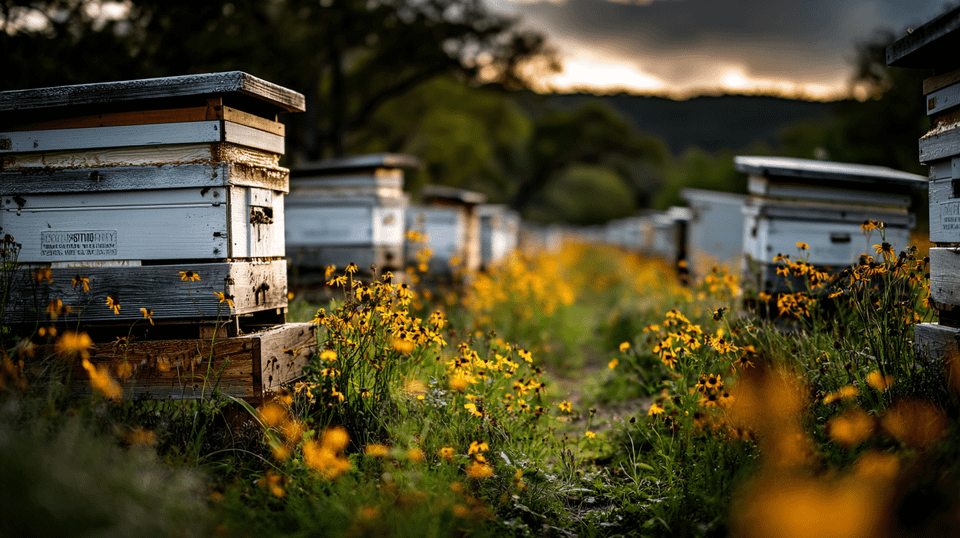
Many landowners lease hives from professional beekeepers who handle all management requirements. Reputable services provide:
- Hive installation and maintenance
- Regular colony inspections and health management
- Documentation for appraisal district compliance
- Honey harvesting (benefits often shared with landowner)
- Insurance and TAIS registration
Verify that any service provider carries insurance, maintains current TAIS registration, and employs certified beekeepers. Landowners often pay 30% of annual tax savings as service fees, still delivering substantial net savings.
County Variation and Research
Each Central Appraisal District establishes its own standards. McLennan County may require different hive counts or documentation than Travis County. Before investing in hives or services, contact your county appraisal district directly to verify:
- Minimum and maximum acreage requirements
- Hive intensity formulas for your property size
- Required months of hive presence annually
- Homestead exclusion calculations
- Documentation preferences and deadlines
- Production valuation rates for beekeeping in your county
Rollback Tax Risk
Discontinuing agricultural use triggers rollback taxes under the 1-d-1 Open-Space valuation (the typical beekeeping qualification). You’ll owe the difference between agricultural valuation and full market value taxes for the previous 5 years, plus 7% annual interest.
Note: The older 1-d Agricultural Use appraisal has a 3-year rollback period with different interest calculations. Most beekeeping operations qualify under 1-d-1, which carries the longer 5-year exposure. Verify your specific exemption type with your county appraisal district.
If you’re transitioning from another agricultural use to beekeeping, maintain continuous qualifying activity. The 5-out-of-7-years requirement allows limited gaps, but complete cessation exposes you to rollback liability. Counties assess rollback taxes when the land changes to non-agricultural use, not simply when it’s sold, provided the new owner continues agricultural operations.
Why Beekeeping Makes Economic Sense
Compared to cattle operations requiring fences, veterinary care, hay production, and daily management, beekeeping offers minimal property impact and flexibility. Honeybees don’t require acreage division, livestock trailers, or constant supervision. You can travel without arranging animal care.
Beyond tax savings, managed honeybee colonies support pollinator populations critical to Texas agriculture. Bees pollinate crops within a two-mile radius, benefiting orchards, gardens, and wildflowers across your property and neighboring lands.
Next Steps for Landowners
For properties without current agricultural exemption:
Start documenting beekeeping activity now to build the required 5-year history. Contact your county appraisal district to understand specific requirements and begin conversations about your qualification path.
For properties with existing agricultural exemption:
Transition to beekeeping maintains your valuation immediately. Research professional beekeeping services or DIY options, then notify your appraisal district of the agricultural use change.
Request a Texas Land Market Analysis to evaluate how agricultural exemption status affects your property value in the current market. Properties with existing exemptions command premium prices from buyers seeking to avoid the 5-year qualification wait.
Frequently Asked Questions
Q: Can I qualify for a Texas beekeeping agricultural exemption with less than 5 acres?
A: No. Texas Tax Code Chapter 23, Subchapter D, Section 23.51 specifically limits beekeeping exemptions to properties between 5 and 20 acres. Properties under 5 acres cannot qualify through beekeeping, though they may qualify through other agricultural activities like livestock if they meet county intensity standards.
Q: Do I need to be a certified beekeeper to get the agricultural exemption?
A: No. The exemption is tied to the land use, not the landowner’s credentials. You can hire professional beekeeping services to manage colonies on your property. However, many counties look favorably on TAIS Beekeeper Registration as supporting documentation.
Q: What happens to my Texas beekeeping agricultural exemption if I sell the property?
A: Under the 1-d-1 Open-Space valuation, selling the property does not automatically trigger rollback taxes. The exemption can transfer to the new owner if they continue agricultural use and file the required application by April 30. Rollback taxes only apply if the new owner changes the land to non-agricultural use.
Q: Can I have a house on my property and still maintain the beekeeping exemption?
A: Yes. Most counties exclude approximately 1 acre for the homestead, meaning you’ll need at least 6 total acres to maintain 5 qualifying acres for beekeeping. The residential acre is taxed at market value, while the agricultural acres receive the reduced valuation.
Q: How long does it take to start saving money with a beekeeping agricultural exemption in Texas?
A: If your property has no agricultural history, you must document 5 consecutive years of beekeeping activity before qualifying for the reduced valuation in Year 6. However, if your property already has an agricultural exemption for another use (cattle, hay, etc.), you can transition to beekeeping immediately without waiting.
Q: What if my homeowners association prohibits beekeeping?
A: HOA restrictions and deed restrictions can prevent you from keeping bees regardless of state agricultural laws. Review your property’s deed restrictions and HOA bylaws before investing in beekeeping equipment or services. Some planned communities and subdivisions explicitly prohibit agricultural activities.
Q: How many times per year do beekeepers need to inspect the hives for exemption compliance?
A: County requirements vary, but most appraisal districts expect regular maintenance consistent with accepted beekeeping practices. This typically means inspections every 2-3 weeks during active season (spring through fall) to monitor colony health, manage pests, and document activity. Keep detailed logs with dates and observations.
Q: Can I combine beekeeping with wildlife exemption on the same property?
A: You cannot claim both exemptions simultaneously on the same acreage. However, if you have more than 20 acres, you could use beekeeping for up to 20 acres and wildlife management for additional acreage. Consult your county appraisal district about how to structure multiple agricultural uses.
Q: What counts as “commercial value” for beekeeping under the Texas beekeeping agricultural exemption?
A: Commercial value includes honey production, beeswax products, pollination services, or hive leasing fees. You don’t need significant income, but you must demonstrate the operation is for producing tangible products with commercial value, not purely recreational beekeeping. Keep records of any sales or production.
Q: Will climate or weather events that kill my bees cause me to lose the exemption?
A: Temporary setbacks like colony losses from weather, disease, or pests won’t immediately disqualify you if you’re making good-faith efforts to maintain the agricultural use. Document the losses and replacement efforts. However, extended periods without active beekeeping (beyond one season) could trigger appraisal district review.
References
- Texas Property Tax Code, Chapter 23, Subchapter D, Section 23.51. Texas Legislature. Available at: https://statutes.capitol.texas.gov/
- Texas Agriculture Code, Section 131.001. Texas Legislature. Available at: https://statutes.capitol.texas.gov/
- Texas Comptroller of Public Accounts. “Agricultural, Timberland and Wildlife Management Use Special Appraisal.” Property Tax Assistance. Available at: https://comptroller.texas.gov/taxes/property-tax/ag-timber/
- Texas Apiary Inspection Service. “Ag Valuation.” Texas A&M AgriLife Extension. Available at: https://txbeeinspection.tamu.edu/
- Texas Comptroller of Public Accounts. “Manual for the Appraisal of Agricultural Land.” Property Tax Assistance Division.
- Herbert, Dennis M. “Steps to Help Get an Agricultural Valuation.” Conservation 1.
- County Appraisal District Guidelines. Multiple Texas counties including Travis, Williamson, Hays, Collin, and Bexar County Appraisal Districts.