Table of Contents
The Texas data center market is rewriting the map of American infrastructure. According to JLL’s North America Data Center Report for year-end 2025, Texas has 6.5 gigawatts of capacity currently under construction, more than any other single market in North America. It is projected to overtake Northern Virginia as the world’s largest data center market by 2030.
Virginia still holds the operational crown with roughly 8 GW. However, its grid is constrained, land is expensive, and its political environment has turned hostile to new projects.
Texas is none of those things. Abundant land and accessible power generation have made the state the primary destination for hyperscale AI infrastructure. The Texas data center market is no longer just a story about Dallas and Austin.
It represents a statewide restructuring of where digital infrastructure gets built, illustrated by the five distinct corridors now forming.
Five Geographic Clusters Defining the Texas Data Center Market
Most coverage treats Texas data centers as a single story. They are not. Each corridor carries different land dynamics, power strategies, and investment profiles.
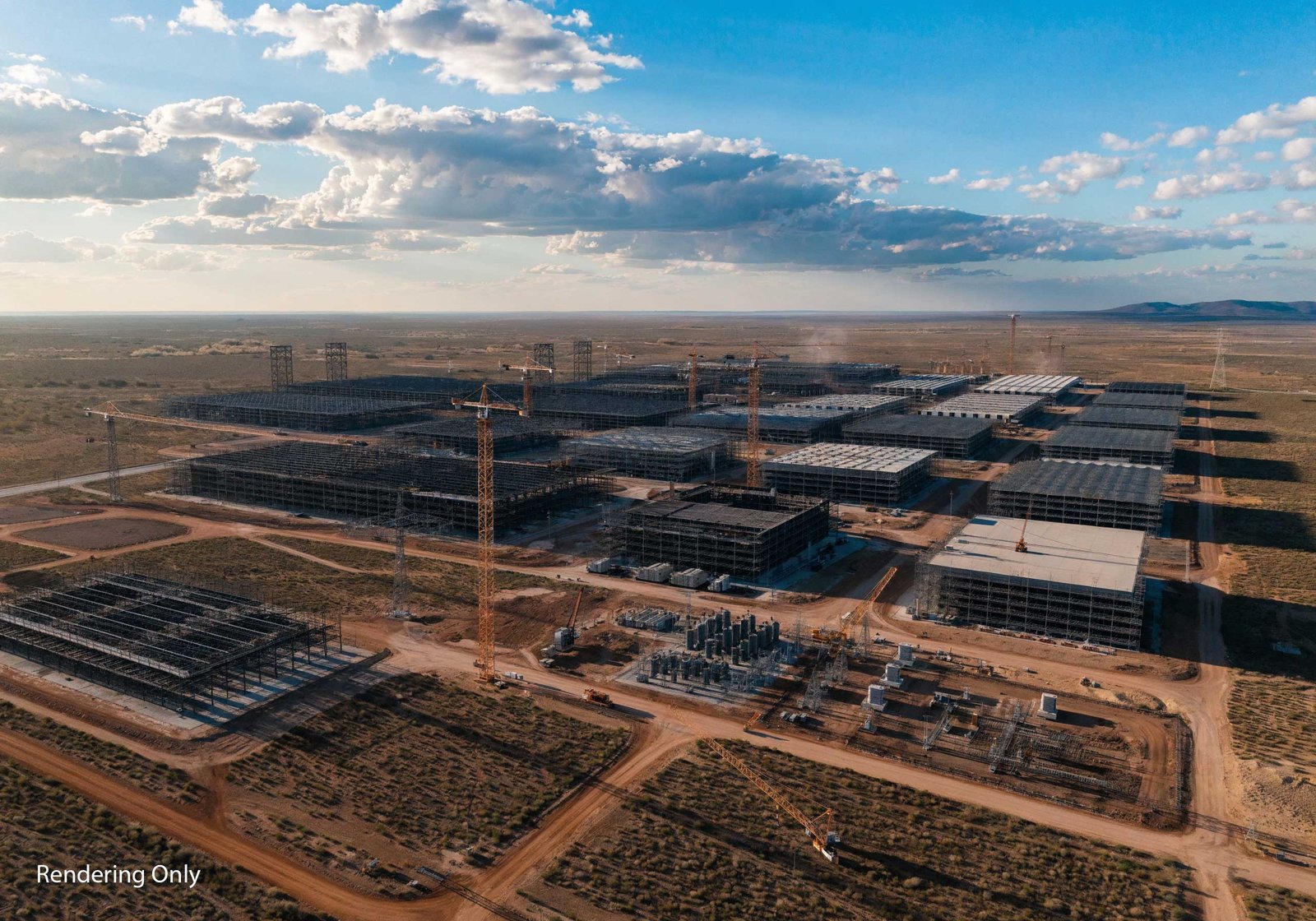
West Texas / Abilene Corridor. This corridor has become the epicenter of the Stargate program, the joint OpenAI-SoftBank AI infrastructure initiative. The Abilene campus is anchored by the original Oracle-OpenAI Stargate complex. Crusoe Energy is now adding 900 MW for Microsoft after OpenAI stepped away from a planned expansion.
This brings the total Abilene complex to 10 buildings and 2.1 GW of capacity on land that was mesquite shrubland just a few years ago.
Microsoft and Chevron are in exclusive negotiations to co-locate a 2.5 GW gas-fired power hub with an AI campus in West Texas, with GE Vernova turbines already on order and a potential 2027 online date. The Chevron deal is something genuinely new: a major oil company not just supplying power, but building and owning the generation infrastructure that feeds an AI campus.
SoftBank’s subsidiary SB Energy is separately developing the Stargate Milam County site northeast of Austin. The target capacity is 1.5 GW over 18 months, with potential to scale to multiple gigawatts.
Panhandle / Amarillo. Fermi America is developing HyperGrid, a $300 billion planned AI campus spanning 5,800 acres with 11 GW of targeted IT capacity. Geotechnical work began in June 2025.
The long game here is nuclear: Fermi has filed a federal application for four Westinghouse AP1000 reactors, with first nuclear operations not expected until 2032.
The campus sits near Pantex, the nation’s primary nuclear weapons facility, at a confluence of major natural gas pipeline infrastructure. This positions the Panhandle corridor as the highest-risk, highest-ceiling bet in the Texas data center market.
DFW Corridor. The traditional hub continues to densify. Provident and PowerHouse Data Centers are developing a 768-acre, 2 GW campus in Grand Prairie directly adjacent to Google’s Midlothian complex, with first power delivery set for May 2026.
Crow Holdings, one of Texas’s most established real estate dynasties, announced a 245 MW campus on 40 acres along the Stemmons Corridor in central Dallas with CleanArc Data Centers as a partner.
When a legacy Texas real estate family moves capital into digital infrastructure, it signals a sector crossing into the mainstream of commercial real estate.
Fort Worth is also in play: Edged U.S. is considering a $1.1 billion, two-phase development on 186 acres in west Fort Worth through 2031.
Austin-San Antonio Corridor. Tract nearly doubled its Caldwell Valley campus in January 2026, adding 1,458 acres to an existing 1,515-acre parcel for a combined footprint approaching 3,000 acres between Austin and San Antonio.
The 2 GW technology park has ERCOT approval for its first 500 MW tranche. This corridor shifted from secondary to primary in roughly 18 months, reflecting both Austin’s constrained land supply and the I-35 spine’s transmission infrastructure.
South and Border Texas. The least-covered cluster carries some of the most ambitious projects. Energy Abundance Development Corp. is developing Data City, a 50,000-acre campus near Laredo designed to operate fully off-grid from ERCOT.
This campus will be powered by natural gas transitioning to 100% green hydrogen from an adjacent hydrogen salt dome storage facility. At 50,000 acres, the land footprint rivals a mid-sized Texas county.
Soluna Holdings is advancing Project Kati in Willacy County, extending the Texas data center market footprint well south of the traditional I-35 corridor.
Meta’s $10 billion El Paso campus anchors the western edge, representing an investment that grew sixfold from an original $1.5 billion commitment, with 1 GW targeted by 2028.
Power Strategy Is the New Site Selection Variable
The Texas data center market has moved past land availability as the primary site selection constraint. Power is now the deciding variable, and the strategies developers are using to solve it are reshaping which corridors attract investment. Texas Senate Bill 6, passed in June 2025, set the regulatory floor.
It gives ERCOT authority to curtail power to data centers during grid stress events, requires them to pay their share of transmission costs, and mandates on-site backup generation capable of meeting 50% of load. Every operator building in the Texas data center market now structures contracts around curtailment risk.
Texas Senate Bill 6, passed in June 2025, set the regulatory floor. It gives ERCOT authority to curtail power to data centers during grid stress events, requires them to pay their share of transmission costs, and mandates on-site backup generation capable of meeting 50% of load.
Every operator building in the Texas data center market now structures contracts around curtailment risk.
The market has responded with three distinct power models. Google announced its Wilbarger County facility using air-cooled technology co-located with AES clean power plants, utilizing a “power-first” approach that also addresses water scarcity concerns.
Fermi’s nuclear bet at HyperGrid builds a captive power system large enough to operate outside grid constraints entirely, if it gets built on schedule.
The Chevron-Microsoft model applies oil-and-gas development logic directly: Chevron builds and owns the generation infrastructure, Microsoft anchors the load. None of these models existed in the Texas data center market five years ago.
Federal Land Enters the Texas Data Center Market
One development in this buildout cycle has almost no competitive coverage in the Texas land publishing space: the U.S. Army’s selection of Carlyle and CyrusOne to build hyperscale AI data centers at Fort Bliss in El Paso under an enhanced-use lease.
The Army keeps the land. Carlyle and CyrusOne finance, build, and operate on a 50-year lease at no upfront cost to taxpayers. The initial project involves 1,384 acres with an estimated $2 billion investment and initial operations targeted for 2027.
A 2025 executive order directed underutilized federal land toward commercial data center and AI infrastructure projects. Fort Bliss is the first Texas execution of that directive, with Fort Hood and Fort Bragg included in the same RFP.
The model—military base as AI infrastructure host, federal government as long-term lessor—introduces a category of project that bypasses traditional commercial land acquisition entirely.
For land professionals tracking the Texas data center market, it is a new type of deal structure worth understanding.
What to Watch Next
The Texas data center market has moved past the announcement phase. Geotechnical work is underway at HyperGrid. Crusoe is building in Abilene. Project Temple in Bell County broke ground on March 2.
Tract has closed land in Caldwell County. Provident has ERCOT approval in Grand Prairie.
The geographic spread, from Willacy County on the Gulf Coast to Fort Bliss at the New Mexico border to the Panhandle near Pantex, means this is not a story about one or two corridors.
The Texas data center market is distributing investment across the state in a pattern that would have been unrecognizable three years ago.
For a closer look at how that investment is already moving rural land markets, see our analysis of how the Texas data center boom is reshaping rural land values.
Part two of this series examines the constraints on that buildout: grid strain, consumer electricity costs, water consumption, and the regulatory and community fights shaping where the Texas data center market can and cannot expand.
Frequently Asked Questions
Is Texas really going to become the world’s largest data center market?
Yes, if current trajectories hold. According to JLL’s North America Data Center Report for year-end 2025, Texas has 6.5 GW of capacity under construction, more than any other single market in North America.
JLL projects the Texas data center market will overtake Northern Virginia as the world’s largest by 2030, driven by available land, power access, and a business-friendly regulatory environment.
Where are Texas data centers being built?
Five distinct corridors have formed: the West Texas-Abilene corridor anchored by Stargate and Microsoft-Crusoe; the Panhandle near Amarillo with Fermi America’s HyperGrid; the DFW Metroplex centered on Grand Prairie, Dallas, and Fort Worth; the Austin-San Antonio I-35 corridor with Tract’s Caldwell County campus; and the South and Border Texas cluster including Meta’s El Paso campus, Soluna’s Willacy County site, and the proposed Data City near Laredo.
What is the Stargate project in Texas?
Stargate is a joint AI infrastructure initiative between OpenAI, SoftBank, and Oracle. The flagship campus is in Abilene, Taylor County, on an 1,100-acre site projected to reach 2.1 GW of capacity across 10 buildings.
SoftBank’s subsidiary SB Energy is also developing a separate Stargate site in Milam County northeast of Austin, targeting 1.5 GW.
What is the Chevron-Microsoft data center deal?
Microsoft and Chevron are in exclusive negotiations to co-locate a gas-fired power hub with an AI data center campus in West Texas.
Chevron would develop a 2.5 GW generation facility with GE Vernova turbines already ordered, serving as the power provider with Microsoft as the anchor tenant.
It is the first major oil company ownership of AI-serving generation infrastructure in the Texas data center market.
What is the Fort Bliss data center deal?
The U.S. Army selected Carlyle and CyrusOne to build hyperscale AI data centers on 1,384 acres at Fort Bliss in El Paso under a 50-year enhanced-use lease.
The Army retains land ownership while Carlyle and CyrusOne finance and operate the facility. With a targeted $2 billion investment and 2027 initial operations, it is the first Texas execution of a 2025 executive order directing underutilized federal land toward commercial AI infrastructure.
What is Texas Senate Bill 6?
SB 6, passed in June 2025, is the first major regulatory constraint on the Texas data center market. It gives ERCOT authority to curtail power to data centers during grid stress events, requires data centers to pay their share of transmission costs, and mandates on-site backup generation at 50% of load capacity.
What is Fermi America’s HyperGrid project?
HyperGrid is a planned $300 billion AI campus near Amarillo spanning 5,800 acres with 11 GW of targeted IT capacity. Fermi America has signed a partnership with Hungarian cooling technology firm MVM EGI and filed a federal application for four Westinghouse AP1000 nuclear reactors.
Geotechnical work began in June 2025. First nuclear operations are not expected until 2032. HyperGrid is a planned $300 billion AI campus near Amarillo spanning 5,800 acres with 11 GW of targeted IT capacity. Fermi America has signed a partnership with Hungarian cooling technology firm MVM EGI and filed a federal application for four Westinghouse AP1000 nuclear reactors.
Geotechnical work began in June 2025. First nuclear operations are not expected until 2032.
Every operator in the Texas data center market now structures development around these requirements.
References
- JLL North America Data Center Report, Year-End 2025. JLL. February 2026. https://www.jll.com/en-us/insights/market-dynamics/north-america-data-centers
- Texas to Edge Out Virginia as World’s Largest Data Center Market. CoStar. February 17, 2026. https://www.costar.com/article/1565983337
- Could Texas Overtake Northern Virginia as the Data Center Capital? Data Center Knowledge. February 23, 2026. https://www.datacenterknowledge.com/build-design/could-texas-overtake-northern-virginia-as-the-data-center-capital
- Microsoft Takes Over Abilene Data Center from OpenAI/Oracle. Fortune. March 27, 2026. https://fortune.com/2026/03/27/microsoft-texas-data-center-open-ai-former-partner-cloud-provider/
- Microsoft and Chevron Enter Exclusivity Deal to Power West Texas AI Data Center Complex. Fortune. April 1, 2026. https://fortune.com/2026/04/01/microsoft-chevron-exclusivity-powering-west-texas-data-center-complex/
- Stargate Milam County: SoftBank/SB Energy Building 1.5 GW Data Center Site in Central Texas. OpenAI. September 2025. https://openai.com/index/five-new-stargate-sites/
- Fermi America HyperGrid Near Amarillo. BlackRidge Research. 2026. https://www.blackridgeresearch.com/blog/largest-biggest-upcoming-new-data-centers-in-texas-united-states
- Provident/PowerHouse 768-Acre DFW Data Center Campus. Bisnow. 2026. https://www.bisnow.com/national/news/data-center/provident-powerhouse-partner-on-768-acre-texas-data-center-campus-127465
- Tract Expands Caldwell County Data Center Park to Nearly 3,000 Acres. Post-Register. 2026. https://post-register.com/texas-data-center-boom-is-surging-but-so-are-questions-about-power-and-water/
- Meta Boosts El Paso Data Center Investment to $10 Billion. CNBC. March 26, 2026. https://www.cnbc.com/2026/03/26/meta-to-spend-10-billion-on-ai-data-center-in-el-paso-1gw-by-2028.html
- Army Selects Carlyle and CyrusOne to Build Hyperscale AI Data Centers at Fort Bliss. Stars and Stripes. March 26, 2026. https://www.stripes.com/branches/army/2026-03-26/army-bases-ai-data-centers-21188343.html
- Google Announces Wilbarger County Data Center with Air-Cooling and Co-Located AES Clean Power. Data Center Dynamics. 2026. https://www.datacenterdynamics.com/en/news/google-to-develop-clean-energy-colocated-data-center-in-wilbarger-county-texas/
- Data City Near Laredo: Hydrogen-Powered Campus Isolated from ERCOT Grid. Bisnow. 2026. https://www.bisnow.com/national/news/data-center/hydrogen-powered-data-city-ai-megacampus-planned-in-texas-128626
- Senate Bill 6: Texas Gives ERCOT Authority to Cut Data Centers During Grid Stress Events. Fox4 News. 2026. https://www.fox4news.com/news/google-new-ai-data-centers-texas
- Rowan Digital Breaks Ground on 300 MW Project Temple in Bell County. Rowan Digital. March 2026. https://www.rowantemple.com/