Table of Contents
Texas landowners can secure agricultural property tax exemptions through wildlife management instead of traditional livestock operations. The wildlife exemption delivers identical tax savings, often 50-80% reductions in rural counties, while eliminating fencing infrastructure, daily feeding schedules, and livestock liability concerns.
This exemption shifted from niche strategy to mainstream option as appraisal districts gained familiarity with wildlife management plans and landowners discovered operational advantages over cattle or hay production. Properties using wildlife management for ag exemption qualify for the same productivity-value assessment as ranches running livestock, but the management requirements differ substantially.
Understanding how the Texas wildlife exemption works, what qualifies, and how to establish compliant operations determines whether landowners can access these tax benefits or face rollback penalties. For background on how agricultural exemptions reduce property taxes in Texas, see our guide to Texas ag exemptions.
What the Wildlife Exemption Provides
Texas Tax Code Section 23.51(2) allows land used for wildlife management to receive special agricultural appraisal. This means the property gets assessed based on its capacity to produce income from wildlife rather than market value for development or residential use.
The tax savings are substantial. A 100-acre tract in a growth county might carry a market value assessment of $1.5 million, generating annual property taxes around $30,000. Under wildlife management exemption, that same property might be assessed at $150,000 based on agricultural productivity value, reducing the tax bill to $3,000 annually.
Wildlife management exemption appeared in Texas law in 1995 as an alternative to traditional agricultural use categories like livestock grazing, crop production, or timber cultivation. The legislature recognized that wildlife habitat provides economic and ecological value comparable to other agricultural activities.
Properties already carrying agricultural exemption under livestock or other uses can convert to wildlife management. Properties that lost exemption status due to discontinued agricultural use can reestablish it through qualifying wildlife management. New landowners can apply for wildlife exemption on previously non-exempt land if it meets minimum acreage and habitat requirements.
Eligibility Requirements for Wildlife Management
Texas wildlife exemption has no statewide minimum acreage requirement written into statute, but appraisal districts typically require at least 10 acres for habitat management to be considered economically viable agricultural activity. Some counties accept smaller tracts if the land connects to larger wildlife corridors or demonstrates exceptional habitat value.
The property must support native wildlife populations and have capacity for habitat improvement. Heavily developed residential lots, industrial sites, or land lacking vegetation and water sources generally cannot qualify regardless of acreage.
Three common scenarios drive wildlife exemption applications:
Landowners switching from livestock: Ranchers eliminating cattle operations but wanting to maintain ag exemption status often convert to wildlife management. This requires developing a formal wildlife management plan and implementing required practices before the traditional agricultural use ends.
Landowners reestablishing lost exemption: Properties that lost agricultural exemption due to discontinued farming or ranching can recapture it through wildlife management. This typically requires a 5-10 year period to demonstrate sustained wildlife management activity intensity before qualification, though some counties allow shorter timelines with strong documentation.
New buyers evaluating exemption potential: Purchasers acquiring non-exempt land can apply for wildlife exemption if the property supports habitat and they commit to implementing a qualifying management plan. First-year approval is possible but requires comprehensive documentation and often faces closer appraisal district scrutiny.
All scenarios require the same core element: a written wildlife management plan prepared by or under the guidance of a qualified wildlife biologist.
The 3-of-7 Practices Requirement
Texas Parks and Wildlife Department guidelines, adopted by most appraisal districts, require landowners to actively conduct at least three of seven approved wildlife management practices annually. Simply owning land that supports wildlife doesn’t qualify—documented habitat improvement and population management create the exemption.
The seven practices are:
1. Habitat Control: Active vegetation management to improve wildlife habitat. This includes brush sculpting to create edge habitat, prescribed burning to stimulate forb growth, and selective tree removal to open understory for ground-nesting birds. For Central Texas properties, this often means managing cedar encroachment to restore native grasslands and browse. South Texas operations might focus on maintaining diverse shrub mosaics for quail and deer.
2. Erosion Control: Implementing practices that prevent soil loss and protect water quality. Installing rock check dams in drainages, establishing grass waterways, constructing terraces on slopes, and maintaining riparian buffers along creeks all qualify. This practice often aligns with NRCS cost-share programs, allowing landowners to obtain financial assistance for improvements that also support exemption compliance.
3. Predator Management: Controlling predator populations to protect target game and non-game species. Legal methods include trapping feral hogs, removing coyotes during fawning season, and controlling nest predators like raccoons and skunks. Documentation must show predator control activities, species removed, and methods used. This practice faces increasing appraisal district scrutiny due to past abuse, so detailed records are essential.
4. Providing Supplemental Supplies of Water: Installing or maintaining water sources that support wildlife during seasonal shortages. Stock tanks, wildlife guzzlers, modified windmills with low-level troughs, and maintained springs all qualify. The water source must be accessible to wildlife, not just livestock. Many landowners satisfy this requirement through existing ranch infrastructure by ensuring wildlife can access established water sources.
5. Providing Supplemental Supplies of Food: Establishing food plots, maintaining native browse, or providing supplemental feeding to support wildlife populations during nutritional stress periods. Native forb enhancement through prescribed fire or disking, planted food plots of wheat, milo, or sunflowers, and maintaining oak trees for mast production all qualify. Protein feeders for deer are acceptable but must be part of a broader habitat management strategy, not the sole food source.
6. Providing Shelters: Creating or maintaining structures that provide cover for wildlife. This includes brush piles for small game, nesting boxes for cavity-nesting birds, bat houses, and preserved snags (dead standing trees) for woodpeckers. Natural shelters like rock outcrops and dense vegetation thickets count if actively managed and documented. Half-cutting trees to create wildlife shelters demonstrates intentional habitat manipulation.
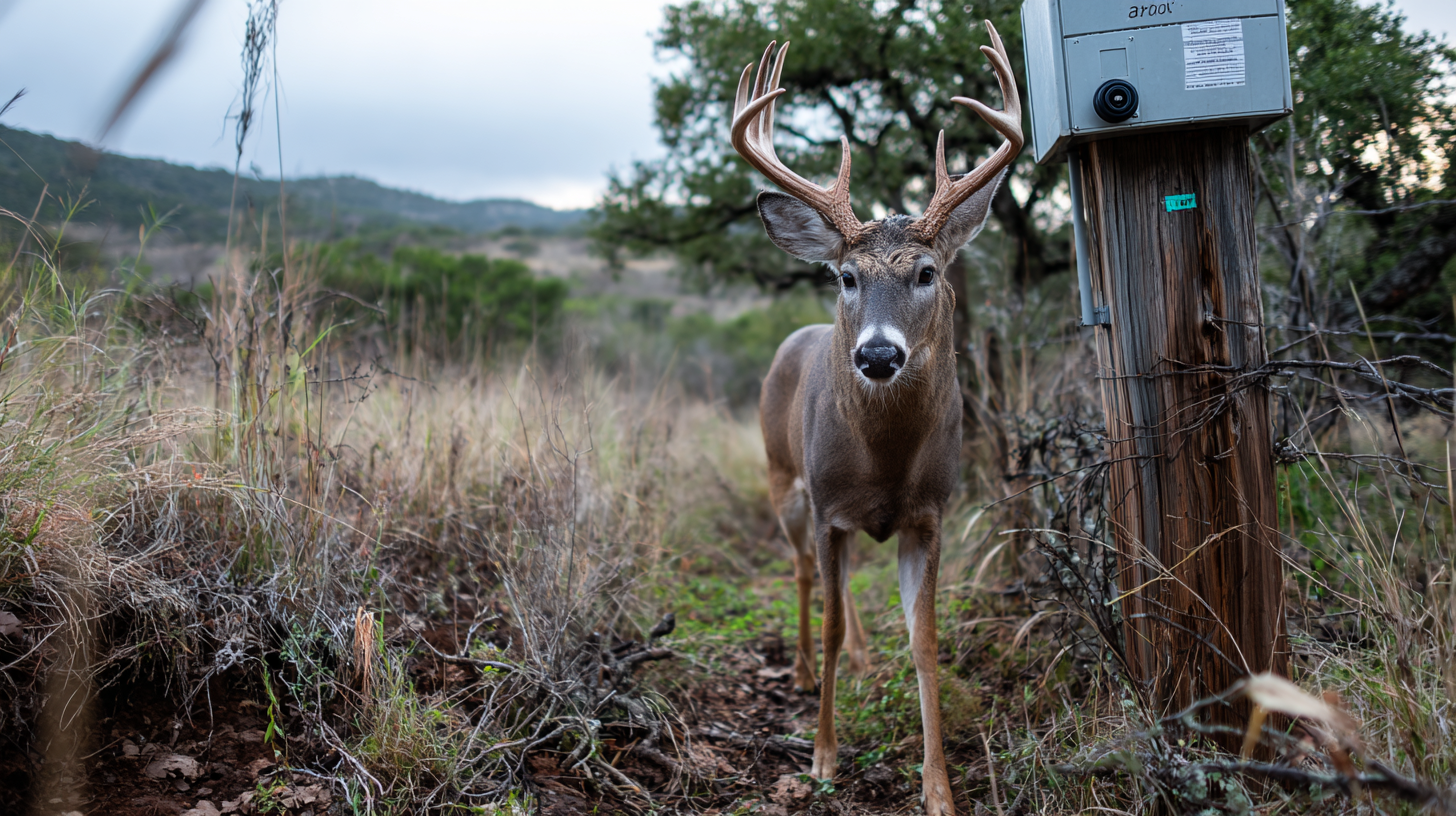
7. Making Census Counts to Determine Population: Conducting wildlife population surveys using accepted methods. Trail cameras with photo documentation, spotlight counts for deer, dawn/dusk bird surveys following established protocols, and track counts all provide census data. The counts must occur at appropriate times for target species and be documented with dates, methods, and results. Annual census data demonstrates active management and provides baseline information for habitat improvement decisions.
Landowners select three practices based on property characteristics, existing habitat, and management capacity. A 50-acre Edwards Plateau property might implement habitat control (cedar management), supplemental water (wildlife drinker installation), and census counts (trail cameras). A 200-acre Post Oak Savannah tract might use erosion control (check dams), providing food (native grass restoration), and providing shelter (brush pile construction).
The practices must actively improve conditions for wildlife, not simply maintain existing habitat. Passive ownership with no documented management activities fails to meet intensity-of-use standards even if wildlife naturally inhabits the property.
How to Get Texas Wildlife Exemption
Establishing a Texas wildlife exemption starts with developing a written wildlife management plan that meets appraisal district requirements. Most districts require or strongly prefer plans prepared by certified wildlife biologists, though some accept plans landowners develop using Texas Parks and Wildlife templates.
Step 1: Property Assessment
A qualified wildlife biologist visits the property to evaluate existing habitat, identify resident wildlife species, assess improvement opportunities, and determine which of the seven practices align with property characteristics. This site visit typically costs $500-$2,000 depending on property size and complexity.
The biologist documents current conditions through photographs, maps existing habitat types, identifies wildlife sign (tracks, scat, browse patterns), and notes water sources, cover areas, and food availability. This baseline assessment forms the foundation for the written management plan. This will go a long with setting up and applying for you Texas wildlife exemption.
Step 2: Plan Development
The biologist prepares a written plan specifying:
- Target wildlife species (must include indigenous game and non-game species, not exclusively exotic game)
- Selected management practices (minimum three of the seven)
- Specific activities for each practice with timelines
- Expected habitat improvements and wildlife population responses
- Documentation methods for tracking implementation
Texas Parks and Wildlife provides standardized plan templates many biologists use as starting frameworks. The plan should be specific to the property, generic templates without site-specific detail face higher rejection rates from appraisal districts.
Step 3: Appraisal District Application
Landowners file Form PTD-23 (Wildlife Management Plan) with their county appraisal district. First-time applicants typically submit between January 1 and April 30 of the year they want exemption to begin, though late applications may be accepted with 10% penalty in some circumstances.
The application package includes:
- Completed Form PTD-23
- Written wildlife management plan
- Property maps showing habitat types and planned improvements
- Biologist credentials and contact information
- Documentation of initial practice implementation (if available)
Some appraisal districts require the biologist to hold specific certifications, Certified Wildlife Biologist (CWB) through The Wildlife Society is widely accepted, as are degrees in wildlife biology or related fields with demonstrated professional experience.
Step 4: Initial Approval and Implementation
If approved, the appraisal district notifies the landowner that the property will receive agricultural appraisal for the current tax year. The landowner must then implement the planned practices and maintain detailed records of all activities.
Initial approval doesn’t guarantee permanent exemption status. The appraisal district can audit compliance annually and revoke exemption if the landowner fails to demonstrate active wildlife management meeting intensity-of-use standards.
Documentation Requirements for Compliance
Maintaining wildlife exemption requires annual documentation proving implementation of the selected practices. Unlike livestock operations where cattle presence provides visual confirmation of agricultural use, wildlife management relies on recorded evidence of active habitat manipulation and population monitoring.
Essential documentation for your Texas wildlife exemption includes:
Activity logs: Date, practice performed, specific location on property, hours invested, and results achieved. “Installed 3 brush piles in northeast pasture for quail cover, 4 hours labor” provides acceptable detail. “Did wildlife work” does not.
Photographic evidence: Before and after photos of habitat improvements, images of installed water sources or food plots, trail camera census photos with timestamps, and documentation of predator control activities. Digital photos with embedded date stamps carry more weight than undated images.
Receipts and invoices: Purchase records for materials (t-posts for erosion control, seed for food plots, bat house construction supplies), equipment rental if applicable, and payments to contractors for habitat work like prescribed burning or brush management.
Census data: Spreadsheets tracking wildlife observations, trail camera photo counts organized by species and date, spotlight survey results, and population trend analysis over multiple years.
Professional consultation records: Annual or biennial site visits by the wildlife biologist to assess progress, recommend practice adjustments, and document ongoing management. Some appraisal districts require biologist verification letters confirming the landowner implemented planned activities.
The appraisal district can request this documentation during compliance reviews, which may occur randomly or in response to complaints. Landowners unable to produce adequate records risk exemption loss and rollback taxes for the previous 3-5 years, plus penalties.
Many landowners maintain a dedicated three-ring binder or digital folder for wildlife exemption documentation, updating it monthly as activities occur rather than scrambling to reconstruct records during audits.
Livestock vs Wildlife Management: The Trade-Off Analysis
Both routes deliver identical tax savings, but operational requirements diverge significantly. The right choice depends on property characteristics, management capacity, and long-term land use goals.
| Factor | Livestock (Cattle) | Wildlife Management |
|---|---|---|
| Upfront Infrastructure | High—fencing, water systems, working facilities, feed storage | Low—most improvements use existing habitat with minor modifications |
| Ongoing Labor | Daily—checking cattle, maintaining fences, moving herds | Periodic—seasonal habitat work, quarterly documentation |
| Liability Exposure | Significant—fence-out states, cattle on roads, neighbor disputes | Minimal—no animals escaping, limited third-party risk |
| Revenue Potential | Moderate—cattle sales or hunting leases | Moderate—primarily hunting leases, limited direct income |
| Flexibility | Low—requires continuous livestock presence | High—practices can be scheduled around other commitments |
| Appraisal District Familiarity | Very high—traditional exemption, well understood | Moderate—newer exemption, sometimes faces more scrutiny |
| Documentation Burden | Low—cattle presence self-evident | High—must prove active management through records |
| Compatibility with Recreation | Moderate—hunting and cattle conflict during calving | High—habitat work enhances hunting quality |
Wildlife management suits landowners who:
- Own property primarily for hunting, recreation, or legacy holdings
- Live off-site and cannot provide daily livestock oversight
- Operate in counties with strict fence laws or high cattle liability
- Want agricultural exemption without ranching infrastructure investment
Livestock operations make sense for landowners who:
- Have existing ranch infrastructure and livestock experience
- Want direct agricultural income beyond hunting leases
- Prefer traditional exemption with minimal documentation requirements
- Operate in counties where appraisal districts heavily scrutinize wildlife plans
Some landowners run hybrid operations—maintaining small cattle herds while also implementing wildlife management practices. This provides operational flexibility and multiple exemption pathways if one approach faces compliance challenges.
Common Mistakes That Jeopardize Exemption Status
Appraisal districts deny or revoke wildlife exemptions for predictable reasons. Avoiding these errors protects tax savings and prevents costly rollback penalties.
Generic, non-site-specific plans: Submitting wildlife management plans that could apply to any property in Texas signals lack of serious intent. Plans must reference specific habitat types on the property, identify actual wildlife species present, and describe practices tailored to site conditions. Districts increasingly reject obvious template documents.
Insufficient practice intensity: Conducting minimal activities that don’t demonstrate genuine agricultural-level effort. Installing one small food plot on 100 acres, placing a single wildlife camera, or performing no habitat work beyond mowing don’t meet intensity-of-use standards comparable to legitimate agricultural operations.
Documentation gaps: Failing to maintain contemporaneous records of management activities. Attempting to reconstruct activity logs months or years later during audits rarely succeeds. Appraisal districts want evidence that practices actually occurred when claimed, not retrospective narratives.
Exotic game focus: Developing plans centered exclusively on exotic species (axis deer, blackbuck antelope) rather than native wildlife. Texas law requires wildlife management to benefit indigenous game and non-game species. While exotics can be present, the management plan must primarily benefit native populations.
Discontinued practices: Implementing required activities for the first year or two, then ceasing active management while continuing to claim exemption. Districts conducting compliance reviews several years after initial approval often discover landowners stopped performing documented practices.
Inadequate water or food supplementation: Claiming these practices without functional infrastructure. A water trough accessible only to cattle doesn’t provide supplemental water for wildlife. A food plot planted once but never maintained doesn’t constitute ongoing practice.
Missing biologist credentials: Submitting plans prepared by individuals without recognized wildlife biology qualifications. Some landowners attempt to save money by developing plans themselves or hiring unqualified consultants, only to face district rejection.
Misunderstanding predator management: Engaging in illegal take of protected species or using prohibited methods while claiming predator management practice. All predator control must comply with Texas Parks and Wildlife regulations and federal law. Documentation showing illegal activities triggers exemption loss.
Landowners facing appraisal district challenges to wildlife exemption status should consult qualified agricultural appraisal attorneys before responding. Informal protests without understanding administrative procedures often worsen outcomes.
Frequently Asked Questions
Can I switch from livestock to wildlife management mid-year?
No. Exemption changes typically require application by April 30 for the current tax year. Landowners planning to transition from livestock to wildlife should file the wildlife management plan application during the standard filing window while still maintaining some livestock presence, then phase out cattle after approval. Abrupt livestock removal without an approved wildlife plan in place risks losing exemption entirely.
Do I need to hire a biologist every year?
Initial plan development almost always requires biologist involvement for appraisal district acceptance. Ongoing management doesn’t mandate annual biologist site visits, but many landowners schedule periodic check-ins (every 2-3 years) to document continued professional oversight and update management recommendations. This creates stronger audit defense if the district questions compliance.
What happens if I miss documentation for one year?
A single year of poor documentation rarely triggers immediate exemption loss if the landowner can demonstrate good faith effort and compliance in other years. However, appraisal districts can initiate compliance reviews, request detailed records, and potentially remove exemption if the pattern suggests discontinued management. Missing documentation for multiple consecutive years almost certainly results in exemption revocation and rollback taxes.
Is wildlife exemption a red flag for appraisal districts?
Early adoption (1990s-2000s) faced skepticism from some districts unfamiliar with wildlife management as legitimate agricultural use. Current appraisal districts widely accept properly documented wildlife exemptions as equivalent to traditional agricultural uses. However, wildlife plans do face closer initial scrutiny than cattle operations because documentation requirements are more complex and abuse potential exists with generic plans.
Will having a wildlife exemption instead of livestock hurt my property’s resale value?
No. Buyers increasingly prefer properties with intact wildlife exemptions because they provide tax savings without requiring ranch infrastructure investment or daily livestock management. Properties marketed to recreational buyers, hunters, or part-time landowners often command premiums with established wildlife management plans already approved by the appraisal district. The exemption transfers to new owners if they continue the documented practices.
Can I still have cattle if I’m using the wildlife exemption?
Yes. Having livestock on the property doesn’t disqualify wildlife management exemption. Many landowners run hybrid operations with small cattle herds and active wildlife management. The key is that the wildlife management practices must be sufficient to stand alone as qualifying agricultural use. You cannot count the cattle toward exemption intensity while claiming wildlife status—it’s one or the other for appraisal purposes.
What if my property is too small for livestock but I want ag exemption?
Wildlife management often works better than livestock for smaller tracts. Ten to twenty acres generally cannot support economically viable cattle operations, but can implement effective wildlife habitat management. Food plots, water sources, and shelters scale well to compact acreage if the property has adequate habitat diversity and supports native wildlife populations.
Maintaining Exemption Long-Term
Wildlife exemption provides Texas landowners substantial property tax relief without the infrastructure burden and daily commitment of livestock operations. The trade-off is documentation discipline and active habitat management that demonstrates agricultural-level intensity.
Properties that support native wildlife, have capacity for habitat improvement, and attract owners willing to implement and document required practices gain significant holding cost advantages. The 50-80% tax reduction typical of agricultural exemption applies identically whether achieved through cattle grazing or wildlife management.
Success requires understanding that wildlife exemption isn’t passive land ownership with reduced taxes. It’s an alternative agricultural use requiring genuine habitat manipulation, population monitoring, and professional oversight. Landowners approaching it with the same seriousness applied to traditional ranching operations protect exemption status and maximize long-term tax benefits.
For Texas landowners evaluating whether wildlife management or traditional livestock better aligns with their property goals, the decision framework is straightforward: if you can document the work and want operational flexibility without daily animal care, wildlife exemption delivers equivalent tax savings with different management requirements.
North 40 Land Group works with landowners and buyers navigating agricultural exemption strategies across Texas. When land transitions require exemption continuity or new buyers need qualification guidance, understanding these requirements protects value.
Frequently Asked Questions
Can I switch from livestock to wildlife management mid-year?
No. Exemption changes typically require application by April 30 for the current tax year. Landowners planning to transition from livestock to wildlife should file the wildlife management plan application during the standard filing window while still maintaining some livestock presence, then phase out cattle after approval. Abrupt livestock removal without an approved wildlife plan in place risks losing exemption entirely.
Do I need to hire a biologist every year?
Initial plan development almost always requires biologist involvement for appraisal district acceptance. Ongoing management doesn’t mandate annual biologist site visits, but many landowners schedule periodic check-ins (every 2-3 years) to document continued professional oversight and update management recommendations. This creates stronger audit defense if the district questions compliance.
What happens if I miss documentation for one year?
A single year of poor documentation rarely triggers immediate exemption loss if the landowner can demonstrate good faith effort and compliance in other years. However, appraisal districts can initiate compliance reviews, request detailed records, and potentially remove exemption if the pattern suggests discontinued management. Missing documentation for multiple consecutive years almost certainly results in exemption revocation and rollback taxes.
Is wildlife exemption a red flag for appraisal districts?
Early adoption (1990s-2000s) faced skepticism from some districts unfamiliar with wildlife management as legitimate agricultural use. Current appraisal districts widely accept properly documented wildlife exemptions as equivalent to traditional agricultural uses. However, wildlife plans do face closer initial scrutiny than cattle operations because documentation requirements are more complex and abuse potential exists with generic plans.
Will having a wildlife exemption instead of livestock hurt my property’s resale value?
No. Buyers increasingly prefer properties with intact wildlife exemptions because they provide tax savings without requiring ranch infrastructure investment or daily livestock management. Properties marketed to recreational buyers, hunters, or part-time landowners often command premiums with established wildlife management plans already approved by the appraisal district. The exemption transfers to new owners if they continue the documented practices.
Can I still have cattle if I’m using the wildlife exemption?
Yes. Having livestock on the property doesn’t disqualify wildlife management exemption. Many landowners run hybrid operations with small cattle herds and active wildlife management. The key is that the wildlife management practices must be sufficient to stand alone as qualifying agricultural use. You cannot count the cattle toward exemption intensity while claiming wildlife status—it’s one or the other for appraisal purposes.
What if my property is too small for livestock but I want ag exemption?
Wildlife management often works better than livestock for smaller tracts. Ten to twenty acres generally cannot support economically viable cattle operations, but can implement effective wildlife habitat management. Food plots, water sources, and shelters scale well to compact acreage if the property has adequate habitat diversity and supports native wildlife populations.
References
- Texas Parks and Wildlife Department. “Agricultural Tax Appraisal Based on Wildlife Management: Legal Summary.” Available at: https://tpwd.texas.gov/landwater/land/private/agricultural_land/legal-summary.phtml
- Texas Tax Code, Title 1, Subtitle D, Chapter 23, Subchapter D, Section 23.51 (Definitions) and Section 23.521 (Standards for Qualification of Land for Appraisal Based on Wildlife Management Use). Available at: https://statutes.capitol.texas.gov/
- Texas Administrative Code, Title 34, Chapter 9, Subchapter G (Wildlife Management Use). Available through Texas Parks and Wildlife Department regulations.
- Texas Parks and Wildlife Department. “Comprehensive Wildlife Management Planning Guidelines for each Ecoregion.” Available at: https://tpwd.texas.gov/landwater/land/private/agricultural_land/
- Texas Comptroller of Public Accounts. “Manual for the Appraisal of Agricultural Land.” Property Tax Division guidelines.
- Texas Tax Code Section 23.55 (Change of Use of Land). Rollback tax provisions as amended by House Bill 3833 (2021), reducing rollback period from five years to three years and eliminating interest charges.
- Texas Landowners Association. “Texas Wildlife Exemption: The Other ‘Exemption.'” Available at: https://landassociation.org/texas-wildife-tax-exemption-the-other-exemption/
- Harris Central Appraisal District. “Texas Wildlife Management Qualifications & Appraisal.” Available at: https://hcad.org/hcad-resources/hcad-agriculture-property/texas-wildlife-management-qualifications-appraisal