
Table of Contents
Texas Data Center Land Is Rewriting What Rural Acreage Is Worth
The first two parts of this series covered the buildout and the constraints. This piece covers the part that matters most to land professionals: what the Texas data center land rush is doing to prices, who is competing for the same parcels, and where the value signals are forming before the broader market catches up.
What Texas Data Center Land Is Actually Worth
Texas data center land does not trade like agricultural land. It does not trade like industrial land either. It is creating its own pricing category, and the spread between a conventional rural tract and a data center ready site is now large enough to restructure how landowners think about what they are holding.
The baseline numbers require some unpacking because they measure different slices of the market. Texas rural land statewide averaged $5,214 per acre through Q4 2025, up 6.56 percent year-over-year, per the Texas Rural Land Prices 2025 analysis from the Texas Real Estate Research Center at Texas A&M, reflecting a five-year compound annual growth rate of 10.73 percent. That figure covers the broad statewide mix of agricultural, ranch, recreational, and transitional land.
Development-stage vacant land averaged approximately $10,200 per acre in early 2026, according to a private corridor estimate. Retail-ready tracts along the North Texas and I-35 corridors are approaching $38,000 per acre in active growth zones. Those second and third figures are corridor-specific and should not be read as broad statewide averages.
The data center premium sits in a different tier entirely. Industry analysts citing Colliers’ 2026 Data Center Marketplace report note that powered land in U.S. markets is trading at roughly 1.63x to 2.5x the value of comparable conventional industrial land nationally, and materially higher in power-constrained markets. In specific corridor markets, land that sold for agricultural use at $40,000 per acre has commanded $300,000 per acre or more once it is considered data center ready. That is not appreciation. That is category reassignment.
The variable separating one Texas data center land parcel from another is not location in the traditional sense. It is power access. A site with realistic grid connection, or better yet a committed power purchase agreement or behind-the-meter generation arrangement, is worth dramatically more than an otherwise comparable parcel. The land itself has not changed. The infrastructure certainty around it has.
The Abilene Effect: Where TRERC Is Already Seeing It
The Texas Real Estate Research Center does not often name specific Texas data center land markets in its quarterly commentary. In its Q3 2025 report, it did. The center explicitly identified the Abilene area, specifically Taylor and Jones Counties, as a market where demand for land has recently spiked due to strong potential for data centers and AI projects. That is primary source confirmation from the most credible land market research institution in the state.
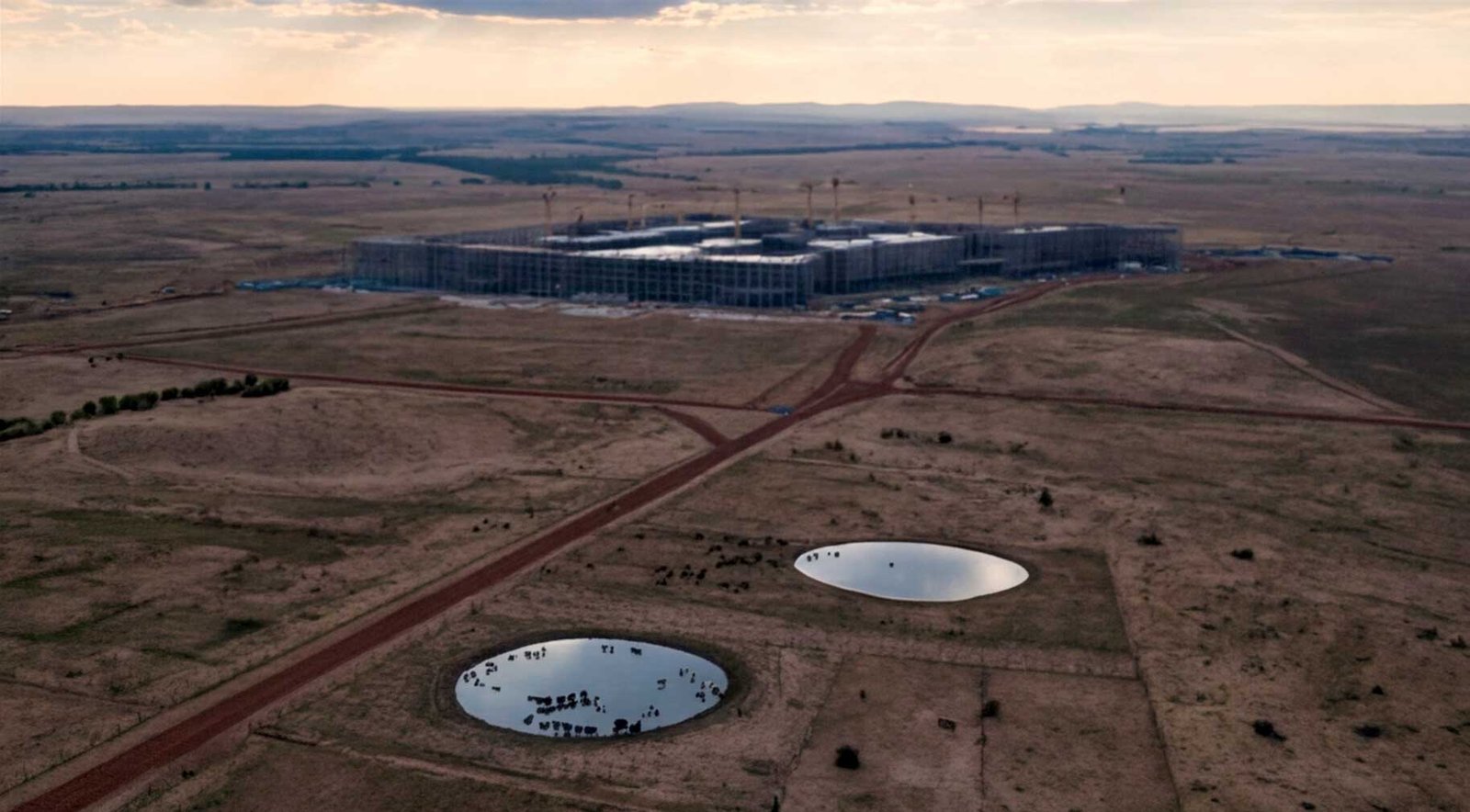
Taylor County is home to the Stargate campus. The 1,100-acre Oracle-OpenAI-SoftBank site that anchors the West Texas corridor sits on land that was priced as West Texas agricultural and ranch acreage before that announcement. Current listings on Land.com show Taylor County parcels marketed explicitly as proposed data center locations, with 1,450-acre and 1,630-acre tracts listed north of Abilene specifically citing data center potential. The median listed price per acre in Taylor County has reached $10,825 based on active listings, a listing price figure rather than a confirmed sales average. Texas data center land in that same county is being positioned at a significant premium to that figure.
The same Texas data center land dynamic is forming in Caldwell County, where Tract has assembled nearly 3,000 acres between Austin and San Antonio for its 2 GW technology park. Caldwell County land was priced as agricultural and Hill Country-adjacent acreage. That pricing context no longer applies to large tracts with transmission access in that corridor.
Data Centers Are Competing With Homebuilders
One consequence of the Texas data center land surge that receives almost no coverage is its collision with residential development pipelines. Data centers and homebuilders are competing for the same utility-ready land, and data centers are winning on price.
The specific requirements overlap more than most people recognize. Both data centers and residential subdivisions need large contiguous parcels, proximity to power substations, access to fiber, and predictable permitting environments. In DFW, Austin, and the I-35 corridor, those sites exist in limited supply. When a data center operator outbids a homebuilder for a utility-served tract at $300,000 per acre, that parcel does not come back to the residential pipeline. It is gone for a generation.
The downstream effect is a shrinking supply of affordable lot inventory near major job centers. When land costs rise, builders pass those costs through. Entry-level homes become mid-range homes. Mid-range homes become luxury products. Texas has built its growth model on attainable homeownership. Texas data center land competition is applying direct pressure to that model in the corridors where it is most visible.
The Worker Housing Spinoff Nobody Is Writing About
A secondary real estate market is forming around data center construction that has gone almost entirely uncovered in Texas land publishing: worker housing.
Data center campuses at the scale being built in Abilene, Caldwell County, and the Panhandle require thousands of construction workers operating in rural markets with limited existing housing supply. Companies including Target Hospitality and Civeo are actively developing upgraded temporary housing camps in rural Texas to support large-scale AI-driven construction projects. These are not standard man camps. They are purpose-built facilities with amenities designed to attract skilled labor to remote locations.
For landowners tracking Texas data center land activity near active construction corridors, that demand represents a short-to-medium-term opportunity that does not require waiting for data center-level infrastructure investment. Lease arrangements for temporary housing sites, RV parks, and workforce accommodations near major campuses are already being negotiated in Taylor County and surrounding markets.
The Tax Incentive Trade-Off
Texas data center land deals are almost always accompanied by incentive packages that directly affect how local governments and landowners should evaluate the value proposition of hosting these projects.
Texas offers qualifying data centers a 10 to 15 year sales tax exemption under state law, and local governments can provide property tax abatements on new improvements for up to 10 years under Chapter 312 of the Texas Tax Code. The state is providing over $1 billion in data center subsidies in 2025 through these combined mechanisms. The Fort Worth/Edged U.S. deal included a 10-year, 50% tax abatement on business personal property worth up to $18.2 million. These structures are negotiated locally and vary significantly by county and project scale.
For landowners evaluating unsolicited data center acquisition offers, the incentive structure matters because it signals how much the developer is counting on local government participation to make the economics work. A project that requires a 10-year abatement to pencil out is a different risk profile than one that does not. For county officials weighing these agreements, Virginia’s experience is instructive: research found the state generated only 48 cents in new revenue for every dollar of tax exemption granted. Texas counties should model their own numbers rather than assume the economic development literature applies uniformly.
What Land Professionals Should Be Watching
The Texas data center land market is not uniform. It is corridor-specific, power-dependent, and moving faster than most rural appraisal districts can track. The sites commanding premium pricing share a specific combination of attributes: large contiguous acreage, realistic transmission access or behind-the-meter power options, proximity to fiber routes, and permitting environments that can accommodate industrial-scale development.
Sites that lack power access are not data center land regardless of location. West Texas and Panhandle parcels without realistic grid connection or captive generation options will not command data center premiums no matter how close they sit to announced projects. The power variable is not negotiable.
The produced water opportunity adds one more Texas-specific angle for West Texas landowners. No major hyperscale campus has announced a produced water supply agreement yet, but the economics favor it. Landowners with existing produced water infrastructure or surface rights adjacent to Permian Basin production may find that combination more attractive to data center developers than raw acreage without water solutions.
This Texas data center land story has a second chapter that will be written over the next 24 months as projects move from announcement to construction to operation. The first movers in each corridor have already acquired what they need. The adjacent parcels, the transmission corridor adjacencies, and the workforce housing sites near active campuses are where the next wave of opportunity sits for land professionals paying attention now.
Part one of this series covered the five geographic clusters and buildout activity across the state. Part two covered grid strain, electricity costs, and water constraints. Links to both are in the references section below.
Frequently Asked Questions
What makes land data center ready in Texas? The primary variable is power access. A site with a realistic grid connection, a committed power purchase agreement, or a behind-the-meter generation arrangement commands a significantly higher price than comparable acreage without those attributes. Beyond power, data center operators require large contiguous parcels, proximity to fiber routes, and permitting environments that can support industrial-scale development.
How much of a premium does Texas data center land command over conventional land? Industry analysts citing Colliers’ 2026 Data Center Marketplace report note that powered land trades at roughly 1.63x to 2.5x the value of conventional industrial land nationally, and higher in power-constrained markets. In corridor-specific markets, agricultural land at $40,000 per acre has sold for $300,000 per acre or more once considered data center ready. Texas rural land averaged $5,214 per acre statewide through Q4 2025 per TRERC, a figure covering the broad mix of agricultural, ranch, and recreational acreage.
Which Texas counties are seeing the most data center land activity? TRERC specifically named Taylor and Jones Counties near Abilene as markets where land demand has spiked due to data center and AI project potential. Caldwell County between Austin and San Antonio, Wilbarger County in North Texas, and Webb County near Laredo are also seeing significant acquisition activity across the five corridors covered in part one of this series.
Are data centers competing with homebuilders for land in Texas? Yes, directly. Data centers and residential developers require similar site attributes: large contiguous parcels, utility access, fiber proximity, and workable permitting. In DFW and the I-35 corridor, data center operators are outbidding homebuilders for those sites. When utility-ready land is acquired for data center use it does not return to the residential pipeline, which reduces affordable lot supply and pushes home prices higher in affected corridors.
What is the worker housing opportunity near Texas data center sites? Large data center campuses require thousands of construction workers in rural markets with limited housing supply. Companies including Target Hospitality and Civeo are developing purpose-built worker housing camps near active Texas construction sites. Landowners near major campuses in Taylor County and surrounding areas are already negotiating lease arrangements for temporary housing, RV parks, and workforce accommodations.
How do Texas data center tax incentives affect landowners? Texas offers qualifying data centers 10 to 15 year sales tax exemptions and local governments can provide up to 10-year property tax abatements under Chapter 312. The state provided over $1 billion in data center subsidies in 2025. Landowners receiving unsolicited acquisition offers should understand how much a proposed deal depends on local incentive participation, as projects requiring maximum abatements carry different risk profiles than those that do not.
Should rural Texas landowners near announced data center projects hold or sell? This depends on specific parcel attributes. Sites with existing power infrastructure, transmission adjacency, or produced water assets in West Texas have the strongest case for holding as the market prices in data center potential. Sites without realistic power access are unlikely to command data center premiums regardless of proximity to announced projects. A qualified Texas land professional familiar with data center site selection criteria is the right resource for parcel-specific guidance.
References
- Texas Rural Land Prices 2025: Four Quarters of Accelerating Growth. The Texas Land Agent. March 2026. https://thetexaslandagent.com/texas-rural-land-prices-2025/
- Texas Rural Land Markets, Third Quarter 2025. Texas Real Estate Research Center at Texas A&M University. December 2025. https://trerc.tamu.edu/article/texas-rural-land-markets-third-quarter-2025/
- Rural Land, Winter 2026. Texas Real Estate Research Center at Texas A&M University. January 2026. https://trerc.tamu.edu/article/rural-land-winter-2026/
- The Shifting Dynamics of Small and Large Land Tracts. Texas Real Estate Research Center at Texas A&M University. March 2026. https://trerc.tamu.edu/blog/the-shifting-dynamics-of-small-and-large-land-tracts/
- Texas Land Pricing Guide 2026. Texas Farm Credit. March 2026. https://texasfarmcredit.com/resources/texas-land-pricing-guide/
- Texas Development Land Averaging $10,200 Per Acre in 2026. DalTX Real Estate. March 2026. https://daltxrealestate.com/estimate-texas-land-prices-2026
- Central Texas Data Center Boom Is Repricing Land, Power, and Industrial Development. Propmodo. March 31, 2026. https://propmodo.com/central-texass-data-center-boom-is-repricing-land-power-and-industrial-development/
- 2026 Data Center Marketplace Report. Colliers. March 2026. https://www.colliers.com/en/research/nrep-usdc-data-center-marketplace-2026
- Homebuilders Have New Competition for Lots: Data Centers. HousingWire. December 18, 2025. https://www.housingwire.com/articles/ai-data-center-land-impact/
- Market Insights and Pricing for Taylor County, Texas Land. Land.com. 2026. https://www.land.com/Taylor-County-TX/
- Data Center Housing Expands Across Texas. CRE Daily. March 2026. https://www.credaily.com/briefs/data-center-housing-expands-across-texas/
- Overview of Texas State Data Center Tax Incentives. Stream Data Centers. 2025. https://www.streamdatacenters.com/resource-library/glossary/texas-state-data-center-tax-incentives/
- Tax Incentives for Building and Operating Data Centers. AbitOs Accountants and Advisors. July 2025. https://abitos.com/tax-incentives-data-centers-2025/
- Where Are Data Centers Opening and How Much Are Cities Making? Civic IQ. January 2026. https://blogs.civiciq.com/2026/01/06/where-are-data-centers-opening-and-how-much-are-cities-making-2025-municipal-revenue-analysis/
- Texas Data Center Policy Overview. Server Country. January 2026. https://servercountry.org/policy/texas/
- Texas Data Center Boom Is Reshaping Rural Land Markets. The Texas Land Agent. March 22, 2026. https://thetexaslandagent.com/texas-data-center-boom-rural-land/
- Texas Data Center Market Is on Pace to Become the World’s Largest by 2030. The Texas Land Agent. April 2026. https://thetexaslandagent.com/texas-data-center-market-buildout-2030/
- The Texas Data Center Market’s Hidden Costs: Grid Strain, Water, and Your Electricity Bill. The Texas Land Agent. April 2026. https://thetexaslandagent.com/texas-data-center-market-constraints-grid-water/

Let’s chat
Texas Coliation Against Data Centers ( Facebook page )
I just posted something I feel important
AI Cloud v AI Data Centers
Got your attention now
Why data centers ? At all ?
https://www.facebook.com/share/p/14YEKMy6HuE/
We the People who are the US
We the People who are Texas
Texans standing with Texans
We Deserve Better
I just want to say I appreciate your comment and your concern, and sharing your thoughts. As the Texas citizens and everybody else navigates this world of new data centers, the more information everyone has, the better.